Archive

Author Archives: alkegw

Lately, I have been writing abstracts again. Maybe it’s the time of year – the term is starting, leaves colour, and call-for-papers for conferences end up in my inbox. What I have noticed is that this time round I seem to have picked up a different understanding of the relationship between studio-practice and academic practice. In order to tell you more about this, I probably need to first tell you how I got there:

One of the things on my itinerary last spring (as a regular reader of this blog you might remember that I was on a sort of sabbatical) was a spring concentration at the Penland School of Crafts. For people interested in crafts this is a very special thing to do – you spend two months on campus in the Blue Ridge Mountains of North Carolina with 24 hour workshop access and literally no outside distractions, giving you the opportunity to immerse yourself into your creative practice and just make. I had been there before, two years ago, when I took a two week class in the letterpress studio, and that had been pretty cool. To be able to come back for two months was an amazing opportunity and experience – and while it wasn’t cheap (as a non-American I didn’t qualify for the work study programme), it was an investment in myself that I am happy I made.

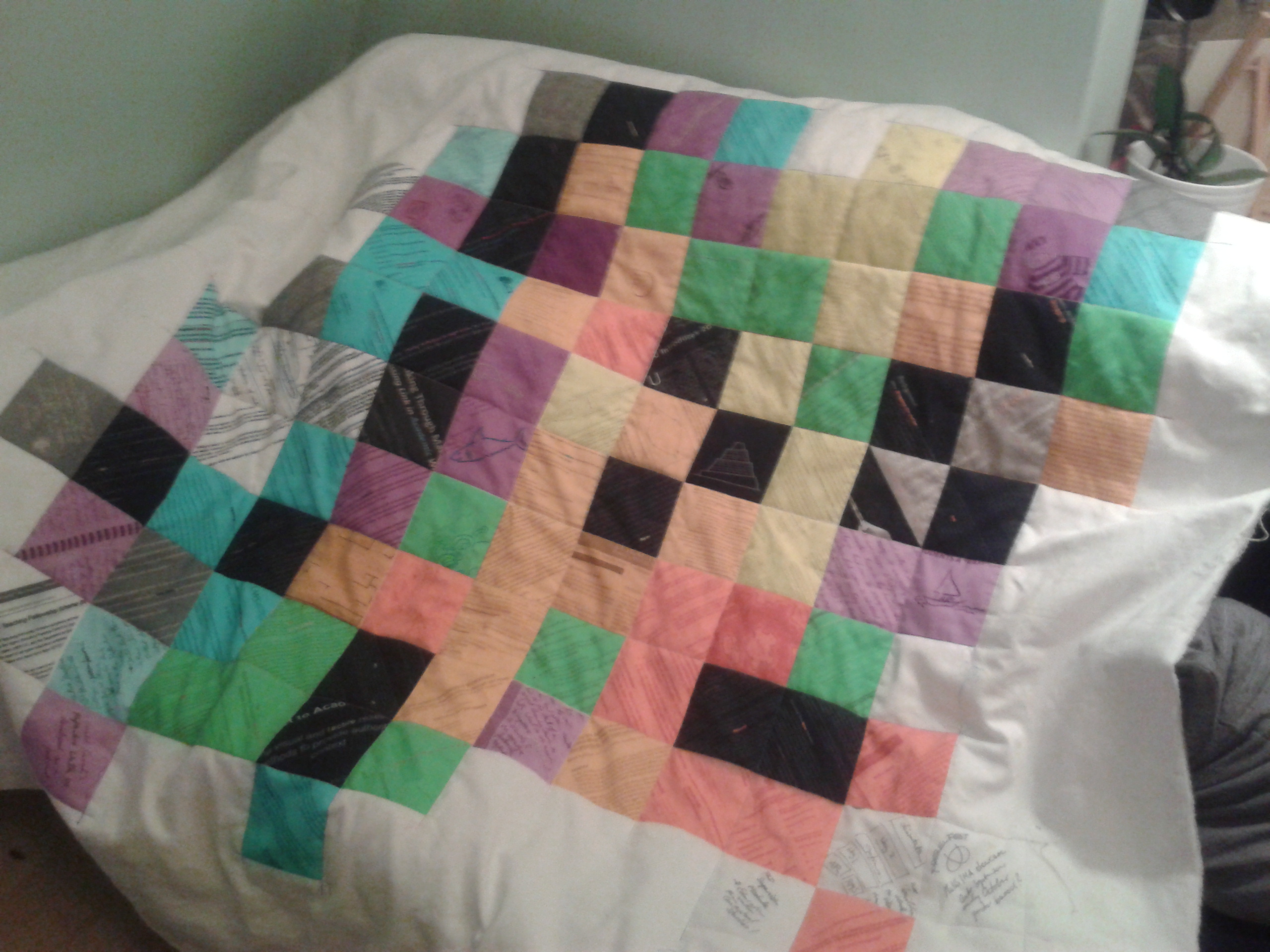
The finished patchwork side of the quilt

The finished patchwork side of the quilt

The concentration I took was called ‘Personal Cartography’, which is what attracted me. I love maps and the idea of devoting two months of my life to just concentrate on making maps and thinking about ways of documenting my environment was too good to miss.  Like probably a lot of people who teach within the creative arts, I struggle with finding the right balance between the teaching (and all that comes with it) and the time to develop my own creative practice. This class seemed like the logical extension to the work on the patchwork quilt I had been doing, which is based on mapping my learning and teaching experiences.The concentration sounded like it was custom-made for me and it came at exactly the right time (me thinking about taking a short break from teaching), so I signed up.

What was secondary for me was that this was a weaving class. Robin Johnston, our teacher, uses weaving to translate different ways she charts her own life (find out more about her work here). Most of these probably wouldn’t be considered as traditional maps, but I love the concepts and thoughtfulness of the work. And I didn’t mind to dip my toes into weaving. I didn’t really have any experience in it, we must have done very simple weavings in primary school, but I knew nothing about weaving on a big loom. However, I like learning new stuff and I figured if the weaving wasn’t to my taste I could always just find other outlets for my mapping.

Suffice it to say, I had a great two months. Sometimes it was really challenging, but at the end of the day I came home with a body of work that I am really proud of, a sort of meditation on identity. What I didn’t expect was that this experience also made me think – and understand better – the differences between studio-based practice and academic practice, between practice and theory, between demonstrating and teaching.

Ever since I started teaching I was aware that there is a difference between working in the studio and working in the lecture theatre and seminar room. Getting these two better aligned is in a way what Tactile Academia is all about. But I’m not sure I fully understood it. Don’t get me wrong, I can talk about it in detail with all the nice little references to theoretical models that the academic community likes so much (and have done exactly that at a number of conferences and in some papers). But the actual experience of it, of intensively learning a practical skill from scratch, something I clearly must have had in the past, must have faded somehow. Let’s say that having the refresher was eye-opening!

DSCI1303

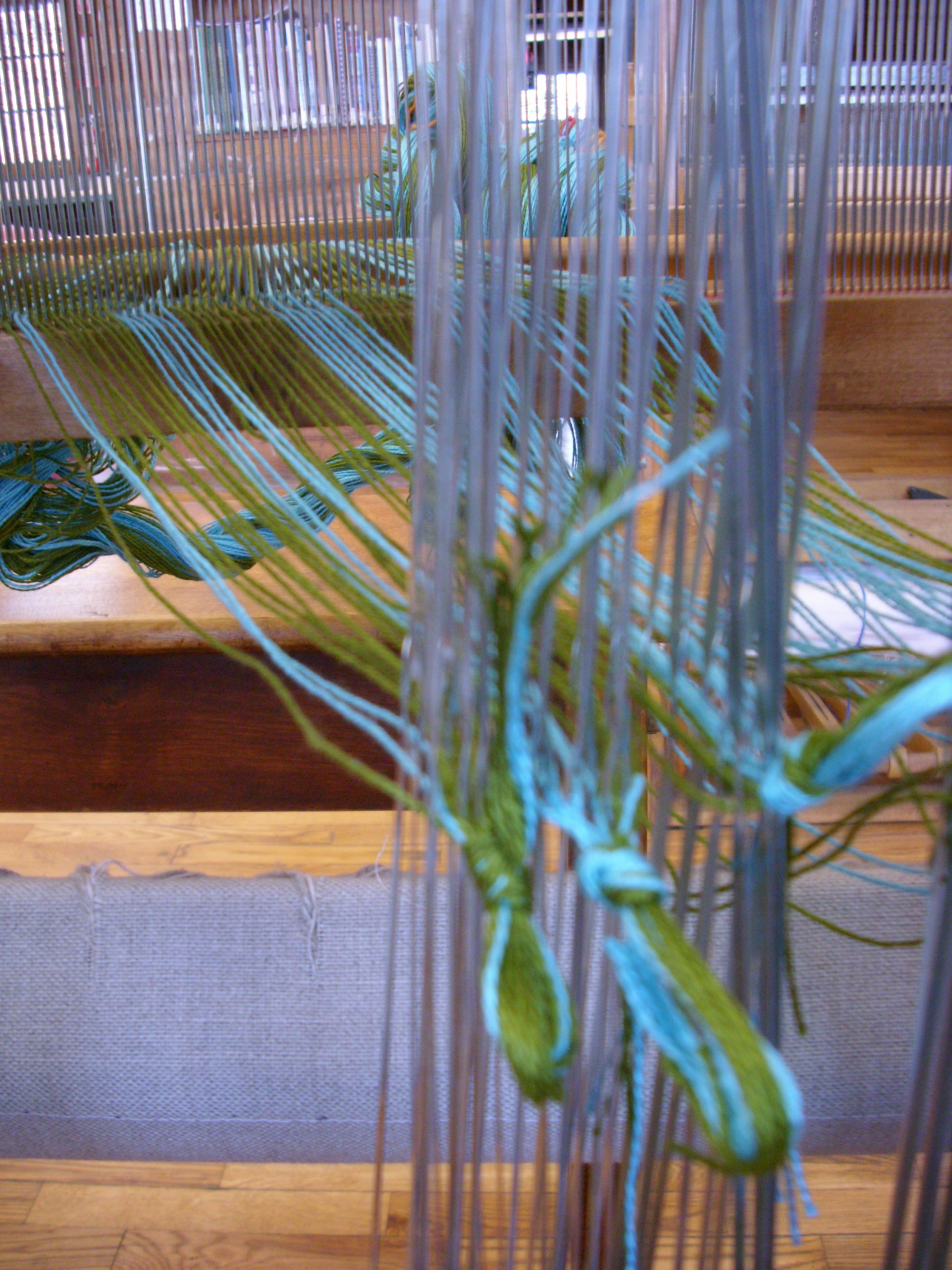
My first threading of a loom in progress.

There are things that are incredibly hard to learn out of a book, but quite easy to pick up if somebody actually shows you. Case in point: For this course Robin had recommended Deborah Chandler’s book Learning to Weave, which as a complete swat serious student, I of course bought and started to read before flying over to the States. This is an excellent introductory book with lots of pictures in it – which I now know with hindsight. Initially most of the information in it was baffling to somebody who didn’t have access to a loom. Turns out that threading a loom is a mind-blowing concept for somebody with no real reference material. Getting an actual demonstration on how to thread a loom, on the other hand, makes this manageable. Putting it into practice yourself makes it easy (yes, you have to pay attention that threads aren’t crossed, and count heddles, but if you put the practice in, it gets easier – and faster – pretty quickly). So weaving, as a practical skill, I learned through demonstrations and practice. And a funny thing happens: once you have acquired the basics, the books make sense. After a few weeks of practice (practice as both a verb and a noun), I was able to understand the Chandler book that had confused me so terribly at the beginning. I also was able to learn how to do double-weave from a book with only a few questions for Robin.

Picking up the ‘personal cartography’ bit of the course was much harder. It’s a much more abstract concept. I think the difference was that while the weaving was demonstrated, the personal cartography was taught. For this we had readings on different practitioners, reference materials, sketchbook exercises, but overall this was much more loose, requiring analysis and independent study. Now you might remember me saying that this, and not the weaving, was my main reason for being there. It was scary how easy it was for me to get distracted by the call of the loom. This magical process that I could literally see I was getting better at with every inch I finished. Of course throwing a shuttle back and forth can become a meditative process pretty quickly, too, and that might have been part of the appeal. But overall, I think I realised that there is something basically almost immediately satisfying about skills that are taught by being demonstrated.

Is this one of the differences between studio practice and academic practice? Essay writing, a part of academic practice, can’t really be demonstrated in the way initial stages of studio practice can. I cannot immediately show the students what is going on in my head when I research and write. I can try to tell them – and I do. I can try to break this down into steps and give them these steps as tasks – which I do. I can show them different stages of drafts – which I do, but we rarely have time to explore these in detail. But this is more teaching by prompt rather than teaching by demonstration. Once they acquire the basics, it becomes a matter of practice. Then advice will make much more sense, just like the weaving book suddenly made sense to me. But getting there by prompt is harder than getting there by demonstration, I believe. And this might be doubly hard if they at the same time are learning skills by demonstration – the skills based in the studio, what they “came to university for” (a distinction I often hear from students trying to defend why they didn’t do the writing tasks I set them), the skills that are much more immediate and – dare I say it – fun.

I think that after my learning to weave experience I now understand the ‘call from the studio’ better. In a way it affirms my thinking that breaking down the first stages of academic practice into aspects that can be visualised or experienced somehow is a good way. Maybe this understanding can help with utilising demonstrating techniques in the seminar room.


Here the promised lecture slides from Susan Ryland’s presentation at the HEA Heroes and Monsters conference. This was a greatly informative session. Particularly interesting: the student blog excerpt on slides 20-24

SusanRyland_HEA_Conference2014

(please see the slides for referencing and Susan’s email in case you want to get in touch with her directly)

from Sue Challis


Introduction
These notes are from initial research explorations of the value of collage both as an aid to problem-solving and as an extension to thinking and learning. They are also part of my unpublished PhD thesis (Maximising impact: connecting creativity, participation and impact in the qualitative evaluation of creative community projects: Coventry University, School of Geography, Environment and Disaster Management 2014).

I became interested in the potential for collage to become part of formative or summative evaluations following my attendance at a Higher Education Academy workshop on collage (Thinking Through Writing and Making, HEA Workshop, Staffordshire University, Stoke-on-Trent, 29 March 2012) when I experienced collage as a problem-solving technique, and through continuing contact with Alke Groppel-Wegener through the Tactile Academia blog, which explores the value of creativity as an aid to academic writing and thinking.

These brief exercises came from the need to formulate recommendations about evaluation strategies which would be feasible for small to medium-sized community projects in less formal or skilled contexts than my own research field trials. I was interested not only in the value of collage but also in the degree to which the method would engage participants outside of a group or creative project context. Participants were asked to complete a problem-solving collage at home and in an academic lecture. I have also included the collage activity which I took part in which prompted my interest in the technique as a research method. Although these are by no means formal research interventions and thus results are only indicative, they are recorded here to suggest the value of further research into the relationship of resistance or willingness to engage with creative techniques to other factors. These might include the type of activities, technologies and materials, the type of participants, and the contexts and skills of implementation. The examples below also suggest that willingness to engage with creative activity and its impact are related to prior experiences and self-narrratives.


Example 1 Collage as an aid to problem-solving

(six adult volunteers, examples from two feedbacks)
I asked six adult volunteers, chosen arbitrarily from my own neighbours and friends but excluding arts professionals, to ‘think of a seemingly intractable problem, work-related or personal, and make a collage while you are thinking about it’. I gave or posted them bags of very similar and random materials (images, text, textiles, stationery) to work on in their own time. For some participants, the task seemed very daunting and slightly odd. Two people returned the bag, both saying that they felt , ‘too un-artistic’ to attempt it by themselves. Four people made collages. I asked them to tell me or write a short account of the process, commenting on how they felt when doing it and what impact it had on their thinking or problem-solving. Figures 1 and 2 are examples of two collages; their makers’ comments follow; and Figure 3 is an example of my own work, made at a Higher Education Academy workshop on collage (Exploring Layers of Meaning, HEA Workshop, University of Chester, Chester, 26 March 2012).

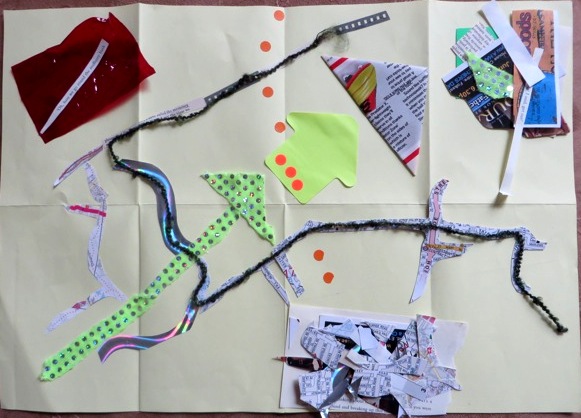
Figure 1 Problem-solving collage (A4 size) Participant 1, adult female)

Figure 1 Problem-solving collage (A4 size)
(Participant 1, adult female)

Text 1

Comments on problem solving collage Figure 1 (above). Participant 1, adult, female.

Extract from email from participant 8.8.13, 22:23

“Subject: Re: Collage”

“The collage was about the assessment of the mental health of a teenager who is extremely vulnerable to sexual exploitation. She has been groomed/ lured by a paedophile ring and given drugs. She takes many drugs. She frequently threatens suicide. She is very verbally abusive to those who try to care for her because of her abuse in her own family of origin. The collage also deals with the response of organisations surrounding the girl and the difficulties in their relationships with each other. The hanged figure represents both the girl and another worker caught up on the turmoil surrounding her. The orange jagged line represents the panic. The Arabic script triangles/ shards represent the impossibility of putting our concern/ her situation/ our situation into meaningful language. The heads represent workers minds making different sense of her experience and our response to her experience. The blank spaces in the heads represent divided minds and the unknown of our own minds hidden from ourselves and from each other.

“Doing the collage helped me stand back from the situation and look at it differently. I had felt overwhelmed by the situation and by my feelings. The collage helped me feel more analytic. It also helped me see parallels between the girl and the worker, both of whom stir up my pity and also my frustration.

“As you know, I hung onto the collage bag for a long time before I felt I had a problem or could see how the collage might help. I was so challenged by this incident at work, which seemed impossible to resolve, that I thought I might as well do it, with no expectation of it working! The pictures and text which had meant nothing before I started to think about the issue seemed to become very relevant when I began to use them for the collage.

PS you know I can bullshit at length!”
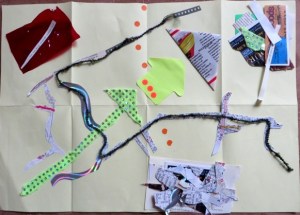
Figure 2 Problem-solving collage (A3 size) (Participant, adult male)

Figure 2 Problem-solving collage (A3 size)
(Participant, adult male)

Text 2 Comments on problem solving collage Figure 2, Participant 2, adult, male;

Extracts from researcher’s notes of informal interview 17.11.13

Researcher (R): How did you feel about the collage before you started it ?
Participant (P): I was reluctant to do this – I was ready to email you and say I wasn’t going to do it, then your reminder came…I don’t really have any problems to solve…I felt that it was a waste of time. I didn’t like the blank page of it, the open-endedness of it…I’m a non-arty person. I am not a person who does collage.
R: But you did do it in the end ?
P: Yes, the only way I could do it was, I put on some choral music which I like, I do listen to music sometimes but most of the time I am doing something purposeful…I had to have something else in my head to get going on it or it would seem like a waste of half an hour.

R: Can you describe your collage?
P: I chose the maps because I like maps and I made a river there, and the string follows the route because that’s how I measure my route on a map anyway…, the dots and maps had a meaning for me, I made the dots into arrows and each arrow gets bigger – that’s me deciding on a line, choosing a direction to go in in life and discarding the things that didn’t have meaning for me…

R: What interested you most about doing the collage?
P: Well… as I was, as I was trying to do it I found myself interested in the way I was selecting things, how I discard some things, like, I am someone who tries, and I try to persuade other people to do this too, to move on, to select a way forward and put the other possibilities, which we have decided not to do, onto one side, to discard them and move on. …So when I started this I realised that it was more about the process of how I solve problems than a particular problem, I discard the irrelevant stuff more than other people I think, then I don’t worry about it. It was like acting out something about myself. I had to decide, select what side of the paper I would keep and which bit discard or hide, it was all about selection…This became pleasurable when I had some idea of where I was going with it…
R: What are these two piles?
P: Well I , these are the things I didn’t want – the discard piles – I stuck them there, it’s only stuff I didn’t want, it might be important to someone else…As I was getting into it…I did start to enjoy doing it… I was thinking about myself, about getting somewhere, solving problems. I saw the solving problem part was about discarding what you don’t need and assembling a way forward, only in the abstract, honing down and selecting to get somewhere. I feel strong, it’s something that works for me… so I was mirroring what I do. When I got the idea of the map or journey I really did enjoy it.
R: Most people throw away the discards. You have stuck them on the collage. Was there a reason for that ?
P: Well, it’s…I suppose it’s because it’s not foolproof…the process of deciding to keep the discards… they are worth keeping, that’s my readiness to admit I’m wrong or go back and look at things again, other options. I think I’m visualising something, the process of keeping the discard, something about myself I hadn’t put into words really before…


Example 2 Collage as an aid to problem-solving (researcher’s own activity)
During the second year of my research I attended a Higher Education Academy workshop on collage (Writing in Creative Practice: Exploring Layers of Meaning, HEA Workshop, University of Chester, 26 March 2013) and made a collage myself which was a significant help in solving my own problem of making the transition from community arts practitioner to academic writer. This extract from a journal article written at the time (and subsequently incorporated into reflections in the Journal of Writing in Creative Practice) sums up the value of the collage to me, particularly the process of selection from random materials. As Butler-Kisber says: “Novel juxtapositions and/or connections, and gaps or spaces, can reveal both the intended and the unintended” (Butler-Kisber 2008: 269):
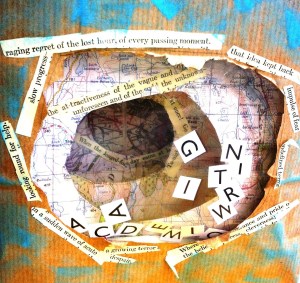
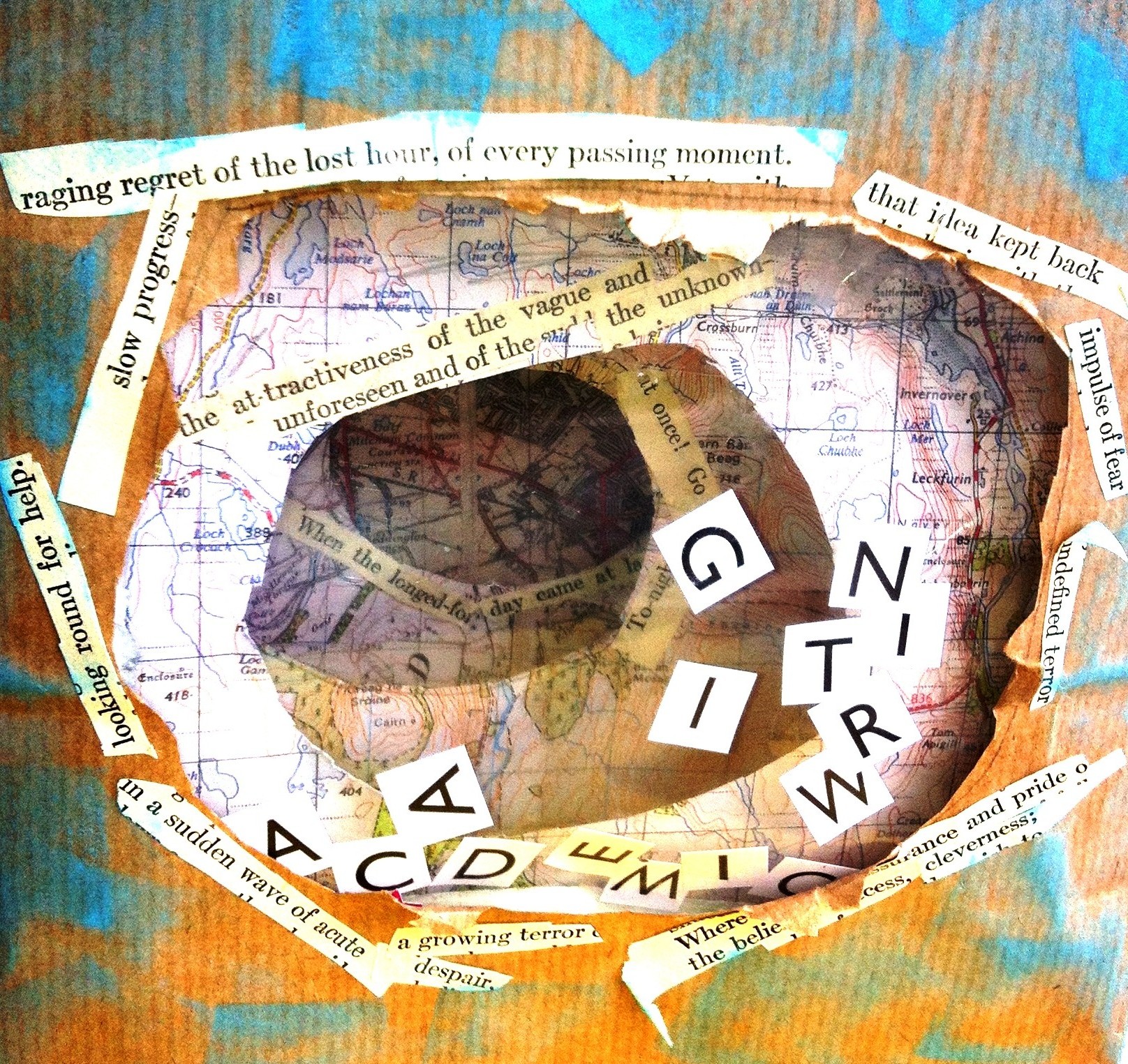
Figure 3 Problem-solving collage (researcher - artist, adult female)

Figure 3 Problem-solving collage
(researcher – artist, adult female)

“I made a 3D collage bag (Fig 3) about my problems with academic writing. A phrase from the provided text sprang at me: ‘… that idea kept back …’ (I think from a Conrad story), and leafing through the collage materials I chanced upon a map showing the house I was born in: as the Quakers say, these two finds ‘spoke to my condition’, helped me understand my reluctance to commit to a genre of writing that seemed to obliterate me and strengthened my resolve to understand how writing might become both academic and creative.

“Specifically, to see the relevance of the …[creative]…process to the wider debate about academic writing and creativity, and, more urgently, to the tensions I embodied trying to understand where my own creativity sat in (what are for me) the arduous and sometimes opaque protocols of academic discourse. Although I had long been familiar with John Wood’s ‘Critique of the Culture of Academic Rigour’ (2000), encountering the Writing PAD project through a ‘hands on’ HEA seminar was the trigger for this: it gave me permission to regard my own creative activity as a way of knowing”.
Challis, S (2013: 189-190)
Example 3 Collage as a means to extend thinking time

(65 undergraduate, third-year Geography students, 15 Youth and Community Work students, Coventry University 2012 and 2013)

At the start of two, two-hour lectures entitled ‘Visual and creative research methodologies’ I gave each Geography student an envelope containing a similar range of collage materials (text, images, fabric, paper, scissors, glue) and explained that the intention was to explore the idea that concentrating on making a collage whilst listening to complex new ideas would support understanding (Butler-Kisber 2008).This activity was drawn from my own experience at the HEA workshop described above. While they worked in silence on their individual collage books (folded paper) I gave a lecture about a range of visual and creative methods, using digital slides, occasionally asking them to ‘look up now’. At the end of the session we discussed their experience and at the start of the second session (a week later) had a brief group discussion reflecting on its impact. I made notes from this discussion but there was no further follow-up as it was the last session of term in each case. This was by no means a satisfactory research exercise, having no means to measure changes in concentration or learning. However, as an activity suggestive of further research, I have included it here for its relevance to issues of resistance to and acceptance of creative methods, rather than the light it sheds on collage as an aid to thinking. Further research might include a questionnaire reflecting on self-reported change and feedback from other lecturers.

For Youth and Community Work students I was restricted to one two-hour session which was less formal (for example, sitting in a circle rather than in a lecture theatre). I introduced the session as above, but invited students to select collage material from a wide range laid out on a table. Students made collage books while I gave a presentation about visual and creative methodologies. The making was followed by a group discussion and some people shared their books.
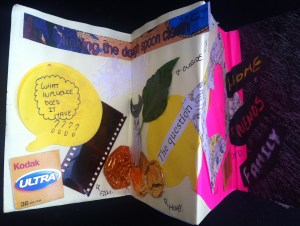
 

Figure 4 Collage made referring to content of lecture (A4 folded paper) (Geography student, male)

Figure 4 Collage made referring to content of lecture (A4 folded paper)
(Participant, geography student, male)

Text 3 Researcher’s observations from notes made after each Geography student session

(two sets of two, two-hours teaching sessions, with collage in first session of each set; November 2012, November 2013):

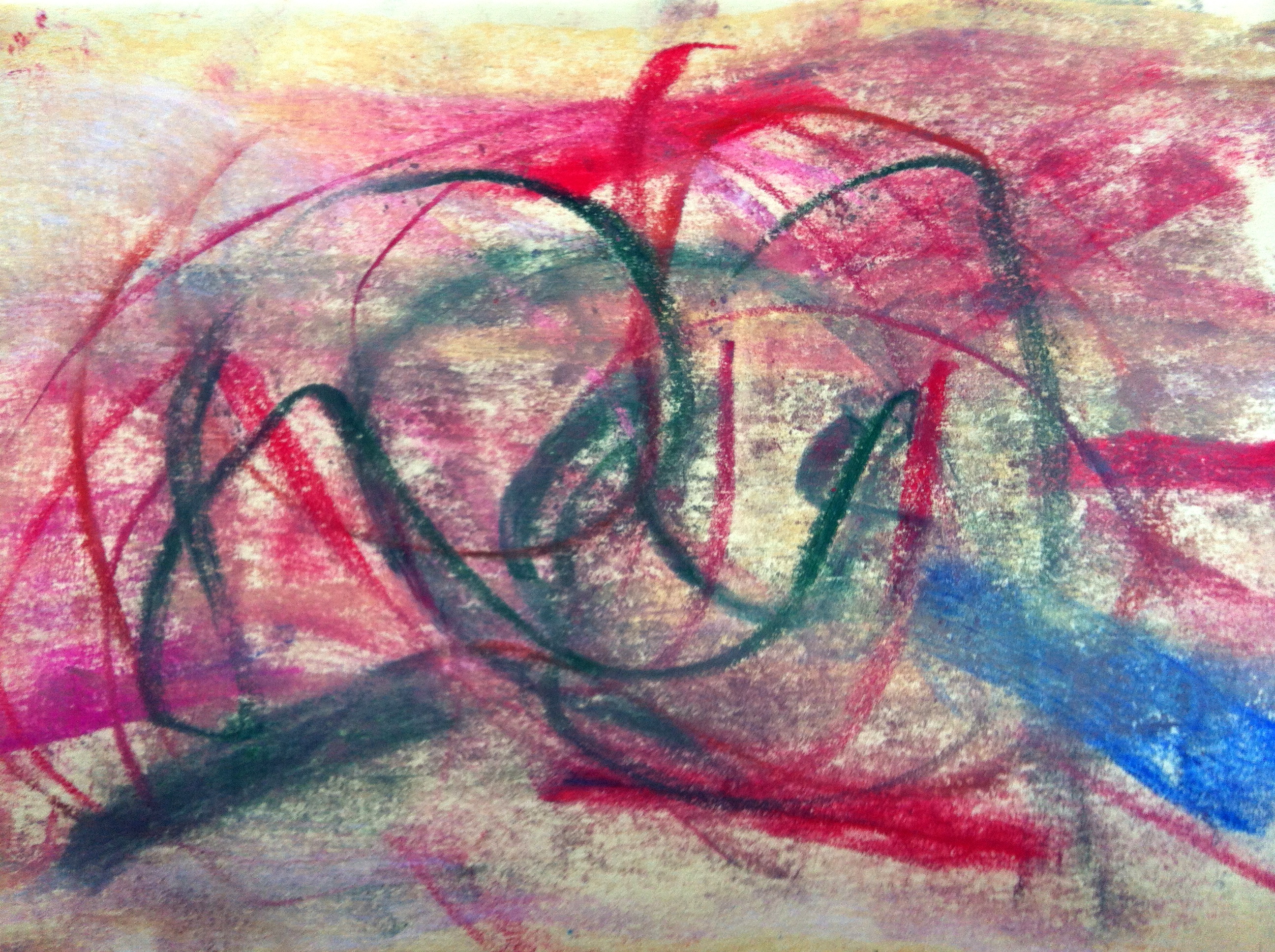
Some students made work clearly referring to the lecture content (Figure 4 ); these sometimes used text or phrases from the lecture or commented on it. For example, one male student made an image of his children learning “arts as well as sciences: I want them to have both to be whole people, not like me I just did sciences”, rather wistfully adding, “I haven’t got any children yet” (Researcher notes from group discussion). Others made collages clearly relating to feelings . A male student made a page, (Figure 5 ), with fierce concentration while listening to a video clip of a woman describing her experience of domestic violence. He commented: “I was feeling strong feelings while I was listening, it was quite upsetting really. I wasn’t really thinking about the drawing”. My interpretation of the drawing was that it reflected his turbulent feelings through colour and markmaking, and intensity through strength of physical gesture (pressure on page and over drawing). As such, it might offer a useful prompt to further discussion or thinking. In both classes a student stapled his finished book together and said that it was ‘private’. This could suggest that personal feelings had been expressed (although these may simply have been critical of the process or ‘rude’).

Figure 5 Made whilst listening to video clip about domestic violence (A5) (Geography student, male)

Figure 5 Made whilst listening to video clip about domestic violence (A5)
(Participant, geography student, male)

Mixed gender groups (marginally more female). In each group all but three students participated (five male, one female). There were varying degrees of willingness to take part. In the final discussions several students (about 5/35) said they found the process “useless”, “a distraction” or “pointless”; a similar number said it was “interesting”, “enjoyable” and they could “see the point”. In each session five people were willing to ‘share’, that is, show and talk about, their own collage, usually describing what it represented to them and how they felt making it. The people who shared made broadly positive comments about the activity (for example, that they ’enjoyed’ it). Six students (three in each group) said they felt that the activity had improved their concentration. In both groups several students said that they had been repeatedly told off in school for persistently doodling during lessons. They related doodling to a way of improving their concentration and ‘enjoyed’ the collage activity.
There was no way of telling if this activity did improve concentration, although the self-report of a small number of students might suggest so in some cases. However, as a ‘pilot’ for the method with a large group, including many adult males (missing from most of my previous research which was mainly with teenage boys and adult women) it was indicative: My informal observations suggested that more female students found it easier to attempt and to enjoy the activity, but I cannot be sure this was true without further research. More male students voiced their reluctance, but there could be many reasons for this. Resistance to participation was linked in discussion either to lack of commitment to qualitative methods (many of the students were using exclusively quantitative methods in their own research and had not used qualitative methods before), or to reluctance to do an arts-based activity because of lack of skill or experience. Where there was reluctance, I did not feel that it was the ‘open-endedness’ per se which was a barrier, rather a lack of belief in the usefulness of the method generally, or for themselves in particular.
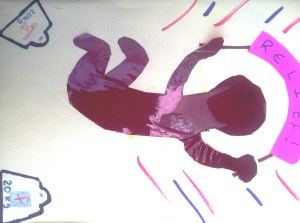
Figure 6 Collage made expressing personal feelings (A5) (Youth Work student, female)

Figure 6 Collage made expressing personal feelings (A5)
(Participant, youth work student, female)

The Youth and Community Work students (also mixed gender, mainly female) were generally more receptive to the collage making, and many of them in discussion could relate it to activities they might carry out in their own professional practice and qualitative research. They saw it much more as a prompt for discussion than an aid to concentration than the Geography students, although several did relate it to doodling as means of concentrating, and most said they ’enjoyed’ the activity. All students in this group shared their collage in the discussion: one student who had stapled his closed, explained this as an expression of specific feelings relating to self-disclosure rather than the activity. Several students in this group made collages about personal feelings unrelated to the lecture (Figure 6). On the whole, I felt that there was less resistance to the activity in this group; but again, this informal interpretation suggests a number of more specific lines of enquiry, about prior experience, current skills, gender, age, ethnicity and so on.

Tentative conclusions indicative of need for further research

In the first problem-solving collage activity, Example 1, participants expressed reluctance to participate connected with not regarding themselves as ‘artistic’ or being convinced about the method. I also think that a self-consciousness about participating in a ‘soft’, reflective activity underlies the comment in Text 1, ‘I can bullshit at length’.

In all cases, the extent to which participants identify themselves as ‘arty’ impacts on willingness to engage (‘I am not a person who does collage’ Text 2); as does prior experience of qualitative research methods. Gauntlett suggests that willingness to engage with creative activity and its impact are related to prior experiences and self-narrratives (Gauntlett 2011). There are perhaps a whole raft of other contingent and structural factors related both to personalities and context. These could be subject to research enquiry in a number of feasible ways.

However, I would suggest that in all the examples shown here, where there has been an engagement with the process, these impacts could be inferred from discussion and examination of the collages to be possible pathways for further research:

1. Contribution to understanding of self or problem solving not available by other means (Texts 1-3)
2. Expression of feelings in a different (not verbalised) way (Figures 5 and 6)
3. Figure 4 also suggests that collage is not necessarily a distraction from new learning. Combined with the comments in Text 2, I relate this to the physical process of selecting and discarding, combining and juxtaposing, in other words, to the embodied enactment of thinking.

Sue Challis
REFERENCES

Butler-Kisber, L (2010) Qualitative Inquiry: thematic, narrative and Arts-Informed Perspectives London, Sage
Challis (2013) Sketchbook Postal Exchange Journal of Writing in Creative Practice Vol 6 No 2 London, Intellect

Gauntlett, D (2011) Making is Connecting :the social meaning of creativity from DIY to knitting and YouTube to Web 2.0 Cambridge, Polity Press

Last week I finished off my unofficial sabbatical by going to the HEA Arts and Humanities Heroes and Monsters Conference. Here’s what I have been up to over those two and a half days…

I hadn’t signed up for a pre-conference workshop, but admired some of the pamphlet stitched books that came out of one of them (sorry, I don’t know which one). A colleague that I worked with in Massachusetts gets her students to make simple books, one blank  lot to be used as sketchbooks during the term, the other specifically to note-take for one module, which uses paper that she copies for them beforehand and which when finished includes prompts and guidance for their note-taking, as well as a fold-out timeline. (I must ask her to write a little guest post on that soon.)

Anyway, so my conference experience started with Monday evenings keynote by Marian McCarthy, the co-director of Ionad Bairre, the teaching and learning centre at the University College Cork. Marian started with an immersive performance piece as an investigator working with the police trying to get to the bottom of worldwide zombie sightings, and made a very good point about using performance to change the dynamic in a lecture theatre, which was a very good introduction to the conference.

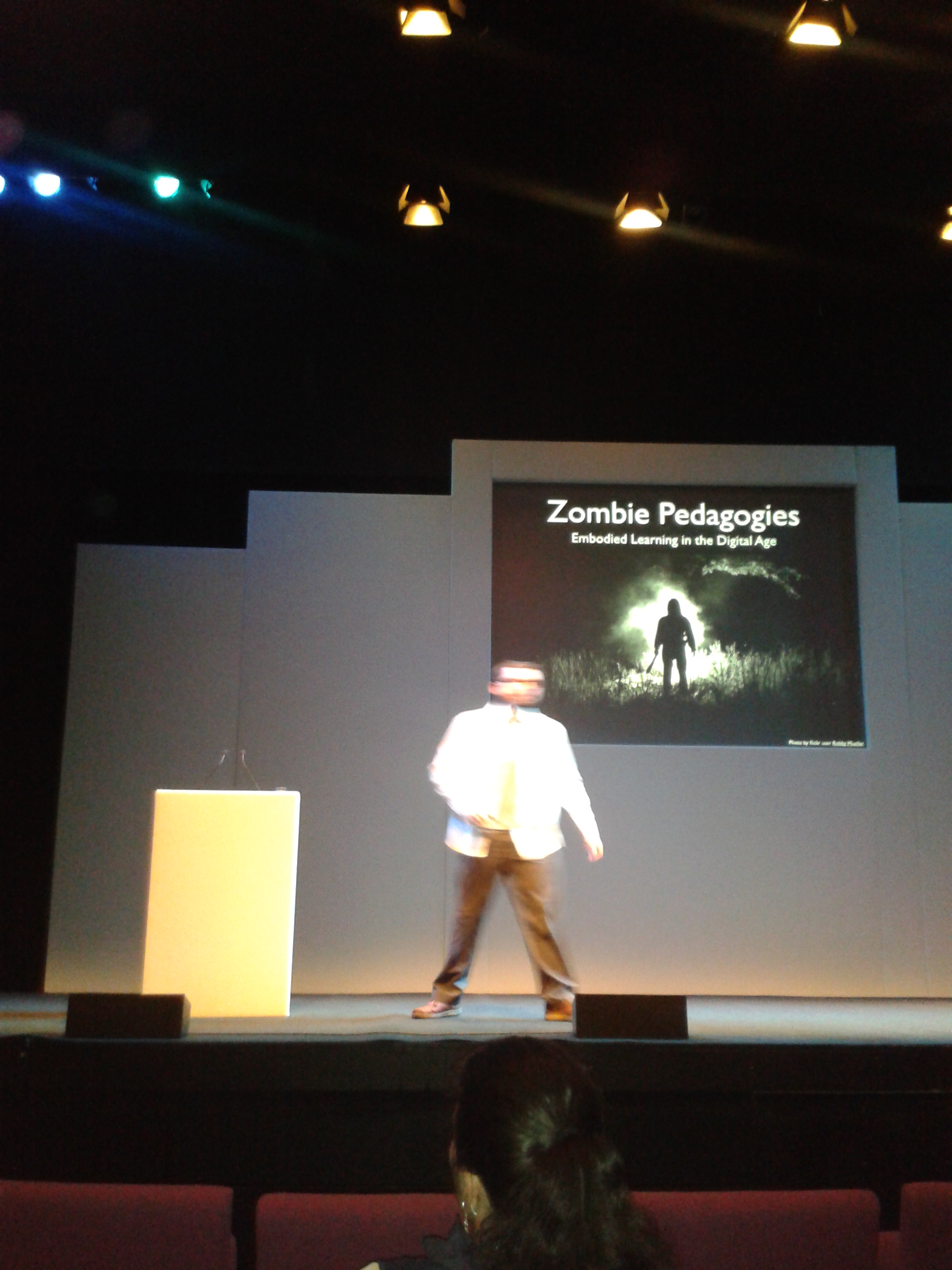
Through my action photography, Jesse looks a bit like a zombie himself...

Through my action photography, Jesse looks a bit like a zombie himself…

Tuesday morning’s keynote on ‘Zombie Pedagogies‘ was given by Jesse Stommel of the University of Wisconsin-Madison. He is one of the brains behind Hybrid Pedagogy, a digital journal of learning, teaching and technology. He made the slides to his keynote available here. Three things I will take away from his talk – way more information about follicle mites than I ever wanted (you sort of had to be there), Jesse talking about a future project where he wants his students to turn Moby Dick into a humument-like artwork, and his remark that “Learning happens in those tangents”. He was referring to the times between conference sessions, the chats over coffee and lunch, but I think this is meaningful in a larger way (something that I will probably post about separately soon).

After the keynote was my own session. As mentioned in a previous post, this was a training montage based around the Fishscale of Academicness (more information on this can be found here). As you can see from some of these pictures, participants were very engaged in designing their own sea creatures for some rather random sample sources, and I got some good feedback afterwards.

This slideshow requires JavaScript.

In the afternoon I wanted to join a session called ‘Talk, Chalk and Walk‘ by Carolyn Bew, subject lead for art and design at the Higher Education Academy. Unfortunately the weather didn’t really play ball, so we couldn’t really embellish the Lowry’s outside with large-scale chalk drawings. Instead we explored the building through a tour by the lovely volunteer Carol, and then popped over the Manchester Ship Canal to the Imperial War Museum North, where I gave a little impromtu talk about the building’s design.

The evening ended with some ‘Ted-ish talks’, some drinks, posters and the conference dinner, where I found myself back at the War Museum, this time at a table set up in the main exhibition space and surrounded by large projections of quotes relating to heroes and monsters. That was quite special, even if the food was not.

My first session on Wednesday was ‘The shape-shifting teddy bear: creating a historic persona and teaching by doing‘ led by Gaby Neher from the University of Nottingham. I had been particularly looking forward to this, as I reblogged her original blog post about this not so long ago. While I made a little superhero outfit for the frog that had insisted on coming for the day and turned a teddy into a vampire teddy (complete with batwings and pipecleaner teeth), the group chatted about this hands-on approach in the context of history teaching, and one of the group also recommended Ian Dawson’s Thinking History site.

Material Samples for Susan's session

Material Samples for Susan’s session

The lecture spectre‘ by Susan Ryland, Imperial College London, was the next session I attended. Susan has been testing collage as a note-taking activity in lectures beyond the art and design realm. Very interesting was a comment by a student she shared with us, which started from a very dismissive position on the collaging activity and transformed into the realisation that it had been very useful. Unfortunately it was presented as a much too short paper, so we didn’t really have time to explore collage ourselves, although Susan had brought some material samples for us to experiment with as an introduction. I hope that Susan will be able to share some of that work with us on here soon.

In the same session Blane Savage talked about his work in ‘Interpreting art practitioner’s unconscious communications through symbolic modelling and metaphoric transformation‘, and he had brought Alison Bell with him, who had been his case study. Both based at the University of the West of Scotland, Blane had used his background in hypnotherapy to allow Alison to describe her work differrently, which allowed her to make some significant breakthroughs in her practice as a fine artist. I found this use of metaphors absolutely fascinating, and again, I hope to be able to publish something more detailed on this blog soon.

The last session of the day for me before we concluded the conference with a plenary was describing two very performative projects. In his presentation ‘Project2of3 – Alternate Reality Games and assessment on Campus‘, Alan Hook from the University of Ulster shared some experiences of Alternate Reality Games with us, and particularly his plans for a future project that hopes to use an ARG format to familiarise students more to the assessment criteria and learning outcomes. In ‘How I survived the zombie acopalypse or summer 2013‘, Teresa Gray from Plymouth College of Art shared some creative writing with us, which she had used to engage more students in cross-departmental activities.

By the time the closing panel arrived I couldn’t help realising that a few monsters had been slain or tamed, and that strategies from the arts and humanities could well be considerd heroes in quite a few contexts. And even if these activities and narratives sometimes feel like tangents at the outset, the learning really does happen in the tangents, in those little ways that we can individually make sense of something through linking it to a personal experience.


Here another event you might be interested in:

Screen Writes
A one-day symposium sponsored by LCC, HEA-ADM and the Writing PAD network.

Date: Friday, June 27, 2014
Start Time: 10.00 am
Location: London College of Communication Room T304 (Tower Block)

Background
The ‘Screen Writes’ Symposium to be held on 27 June at LCC will explore the purposes and practices of writing as practice for BA students engaged in visual communication, including graphic design, advertising and animation. The idea of a symposium has sprung from the new ‘writing and blogging’ course for Level 1 students at the London College of Communication (Mark Ingham, with Andrea Mason, Linda Stupart, Andrew Slatter and Harriet Edwards): this will be critically analysed. The emphasis more generally is on writing practices emergent from studio concerns in line with the ethos of the Writing PAD project and its subsequent network. There will be time to discuss and exchange across roles and institutions in this symposium.

The ‘Screen Writes’ symposium is intent on exploring a number of interconnected areas related to graduate attributes.  Firstly, the role of creative writings in relation to voice and identity through the daily and weekly practice of making the student’s writing public using online presences, in this case a practice/theory blog. This allows the students to see writing as going from being a fairly passive, summatively driven activity, to one that is in constant formation.

Secondly, it will explore the inherent mix that writing has with image and graphics in visual communication practices. This includes the surveying of tools and techniques employed when using online presences and how these can be used in such things as peer-to-peer learning. The idea that design and media students are writing with images will be analysed and challenged at this symposium. It will explore the possibilities of writing from images, writing with images, writing to images and writing against images. The beaten paths of these long and often debated relationships in academic writing will be taken off track to see if the cliches that surround these interactions in academia can be torn apart and reworked into more productive dynamic exchanges.

Thirdly, the potential of such practices to create a presence in social medias with a view to professional purposes, or how blogging, and indeed tweeting, can link the students to communities and prospective avenues beyond the university, will be scrutinised.  Students have been encouraged to think about their online presences in a number of ways. As a digital note book/sketchbook where ideas can be drafted, edited, reworked and published. It also made the students think about who they were writing for in a professional context.

Fourthly, the articulation of the place, and merit of such practices within the wider design curriculum will be discussed. This will be in relation to employers wanting to see, not only a finished portfolio website that is demanded by the profession and academia, but a blog type site that also show the thinking, mistakes and the processes through to the making of final works.

Programme

10.00  Coffee
10.30  Introduction to the day, Mark Ingham
11am   Writing as a creative activity for BA design (workshop,) Andrea Mason and Andrew Slatter
12.00  The pedagogy of creative writing in the context of design  (talk), Andrea Mason
12.30   Graphic design and writing, Andrew Slatter
1pm  Lunch
1.45  “eRTFs” (Enriched Text Formats) Online, continuous and present writing in Art and Design Contextual & Theoretical lessons, Mark Ingham
2.30 The Myth of Creativity: How ‘creative writing’ in arts and design courses fails as effective/affective to, Linda Stupart
3pm Tea break
3.30 Screens and writes: what kinds of intelligences? Harriet Edwards
4-5 Discussion and exchange in small group; final feedback

We have some space for participants outside LCC itself to write-up their own practice OR responses to the day, with images or as a visual essay for Writing PAD’s Journal of Writing in Creative Practice (Intellect).

Free but please book

Attendance is free of charge with preference being given to staff in HE institutions and FE colleges across the UK. Places will be allocated on a first come, first served basis. Lunch and refreshments will be provided, but travel expenses will not be covered. However, the HEA is currently running a funding scheme to support travel crossing national borders to attend events, which could be applied for independently. For more information visit the HEA UK Travel Fund.

We have 32 places available on this day.

To book a place, please email:

Dr Harriet Edwards
hedwards@csm.arts.ac.uk
(Journal Editor)

OR: Dr Mark Ingham
m.ingham@lcc.arts.ac.uk

At this week’s HEA Arts and Humanities conference, I was able to present an update of the fishscale research. The title of the 90 minute session was ‘Hunting Seamonsters – how to bust the ghosts of academic practice’, a nod to both the conference theme (Heroes and Monsters) and the strand (Ghosts) the abstract had been submitted to.

It was conceived as a ‘training montage from an 80s movie’ (a format suggested by the conference organisers), and this post is about this format rather than the content of the session. (The content was about the Fishscale of Academicness, if you want to know more about that, check the dedicated page on this blog.)

I love the idea of thinking about a presentation or a workshop in terms of a movie. I’ve been doing something similar with my students when talking about framing and structuring their writing, but I hadn’t quite realised this is also what I do when I plan my presenting. When doing my Post-graduate Certificate in Higher and Professional Education, we were told to vary the activities in a session every so often to keep the attention of students. And we were encouraged to plan our sessions in certain blocks, breaking down the different delivery methods and student activities. This was recorded (and planned) on a form, so basically a list. But there is no reason why it shouldn’t be a storyboard.

When putting together the abstract for this conference, the format of the training montage was incredibly helpful. I co-wrote this with a colleague from our School of Education and we wanted to bring in different perspectives of the Fishscale – the initial inspirations, the problem, the context, what other people are doing about this, the fishscale concept itself, the different activities for the students to consolidate the learning, the feedback from students, the feedback from other staff, an analysis of how the fishscale is working, and an idea of the research we are in the process of doing in order to evaluate whether it is actually working. This is a lot of stuff, even if you have 90 minutes to do it. Having the training montage in our heads, it became much clearer that we need to think not about all the content we have (or could have), but about editing it together. This was not going to be a documentary on one specific process, it was about selecting one important image/issue that could represent an area (and I have done a number of presentations that look at just one aspect of the fishscale). We are not shown every push-up that Rocky makes to get in shape, after all.

So in a way, we started planning with the cuts. We wanted a clear change every time we altered the perspective, and we ended up with six sections, alternately delivered, each time also swopping the delivery method – ranging from powerpoint presentation, to prezi, from group activities to discussion with the whole group.

Thinking about this planning as a training montage meant that my thoughts shifted from all the stuff I could have put in to just the most important things: what would give a flavour of this data? what do people need to know about in order to understand the fishscale? – How many push-ups do we need to get a sense that push-ups are being made regularly? How much can you reduce information to convey push-up-ness?

This is not a big shift from planning a session as a list, but I have found that story-boarding mentally can really help to condense and refine your content to make the most impact it can. So I will in future be conceptualising my session planning more as two parallel storyboards – one narrative of what I do as a presenter, and one with what I task my audience to do.


P.S.: while the Hunting Seamonster session went well, it had to be replanned last minute because Katy was ill and couldn’t do ‘her’ scenes. But while not all of the ‘cuts’ were as pronounced as they could have been, with me delivering most of them myself (I had another colleague standing in for some bits, but there wasn’t sufficient time for a full brief of everything), the integrity of the montage stayed intact, and this was a very different session than if I had planned it for myself without thinking about the visual of the training montage.

On Thursday, 26th June 2014, the East Midlands Writing-PAD centre will be launched with a one day workshop titled ‘Journeys in Visual Learning’. This event will take place at Kimberlin Library, De Montford University in Leicester between 10.30 and 16.00.
For more information please email Christine Boulter (cmb[at]dmu.ac.uk)


East Midlands Writing PAD Centre launch: Journeys in visual learning
Thursday 26th June 2014
Kimberlin Library, De Montfort University, Leicester
Julia Reeve and Kaye Towlson

‘Journeys in visual learning’ offers Academics, Librarians and Learning Developers an opportunity to share experiences and practice in visual & kinaesthetic learning techniques. With the launch of our new East Midlands Writing PAD Centre we also seek to establish local & regional links with other HE institutions. The day will showcase creative and radical approaches to learning and teaching at DMU and elsewhere. Delegates will be encouraged through discussion and activities to reflect upon their own ‘visual learning journeys’ to the day and beyond.

The event offers the chance to:
• Experience visual and kinaesthetic learning techniques
• Hear about the student response and experience of such techniques
• Consider the theoretical underpinning to this type of learning
• Explore visual journeys in a number of contexts
• Take part in group work to encourage putting these methods into practice
• Network across disciplines, professions and institutions.

10:30 – 10:50: Registration and creative activity: Start the day with coffee and a look at displays of techniques plus resources

10:50 – 11:20: Creative activity: mapping your journey using a range of media

11:20-12:00: Our journey: Teacher Fellow research projects, Writing PAD and more: Kaye Towlson, Academic Librarian, DMU (Information Literacy) and Julia Reeve, Senior Lecturer, Contextual Studies for Fashion & East Midlands Writing PAD contact, DMU

12:00-12:40: Navigating the Essay: Making Writing Multi-sensory: Jackie Hatfield, Tina Horsman & Jacqueline Szumko, Specialist Tutors for Students with Specific Learning Differences, Loughborough University

12: 40-1:30: Lunch: in Learning Development Zone, Kimberlin

13:30 -14:10: Contextualised performance with collage: Simon Perril, Subject Leader for Creative Writing, DMU

14:30 – 15:00: Group work: your future visual learning journey – mapping practice, ideas, and experiences

15:00 – 15:20: Group visual learning journey tour and tea

15:20 – 15:45: Group feedback

15:45 – 16:00: Close

Interested? Please book your free place by e-mailing Christine Boulter cmb@dmu.ac.uk giving your name, job title and institution

If you require a parking space on the day, please book one through Christine Boulter (cmb@dmu.ac.uk). Please note parking is limited. DMU is a 10 minute walk from Leicester train station and approximately 15 minutes from Leicester bus station.

Meant to re-blog this ages ago: a great way of facilitating learning in a very creative, tactile – and above all fun – way! (The pictures don’t seem to appear, so it is really worth checking out the original blog post)

Gabriele's avatarrenaissanceissues

One of the modules I am teaching for finalists is quite a challenge from the point of view of delivering it. ‘Renaissance luxuries’ takes, in a way, it’s inspiration both from Richard Goldthwaite’s work on Wealth and the Demand for Art in Renaissance Italy, and AD Fraser Jenkins’ musings on magnificence. In the course of a semester, I range quite widely across a range of genres and materials, and look at what constituted a luxury item in the Renaissance and what their possession and consumption meant for their owner. So, you could argue that the Third theoretical plank for this module is Stephen Greenblatt’s concept of self- fashioning; as a concept, it certainly helps with thinking through some of the issues.
A tight theoretical framework is certainly a necessity for this particular module, as the focus on case studies shifts on a weekly basis, so while we might be looking…

View original post 1,405 more words