Archive

Workshops

Another long overdue post…

a well-prepared bag full of bits

On 14th September I was lucky enough to join Sarah Williamson on a reflective walk she organised and led as part of a Teaching and Learning event at the University of Huddersfield. As you may know if you are a regular reader of this blog, Sarah teaches Art and Design teachers and this walk is one of the things she does with her students to remind them of the learning they have done and to encourage reflective practice.

While it will be difficult to do this experience justice, here are some of the things I particularly remember…

The Gateway – an entrance to a new experience

While we had a short walk to the actual beginning of the walk, once we were there, Sarah pointed out the gateway, making us aware of the idea of starting a new experience – this was not just a walk anymore, this was about us reflecting on our teaching practice.

leaving blahblahblah behind us

Once we had passed the gateway and turned the corner, we were greeted by a larger print-out stating BLAH BLAH BLAH, something we were to leave behind us on this walk (and hopefully in our reflection on our practice…).

We then encountered a number of texts and quotations that had been secured to the trees and shrubs, all concerned with reflective practice and teaching – and particularly the impact that landscape and environment can have on these issues.
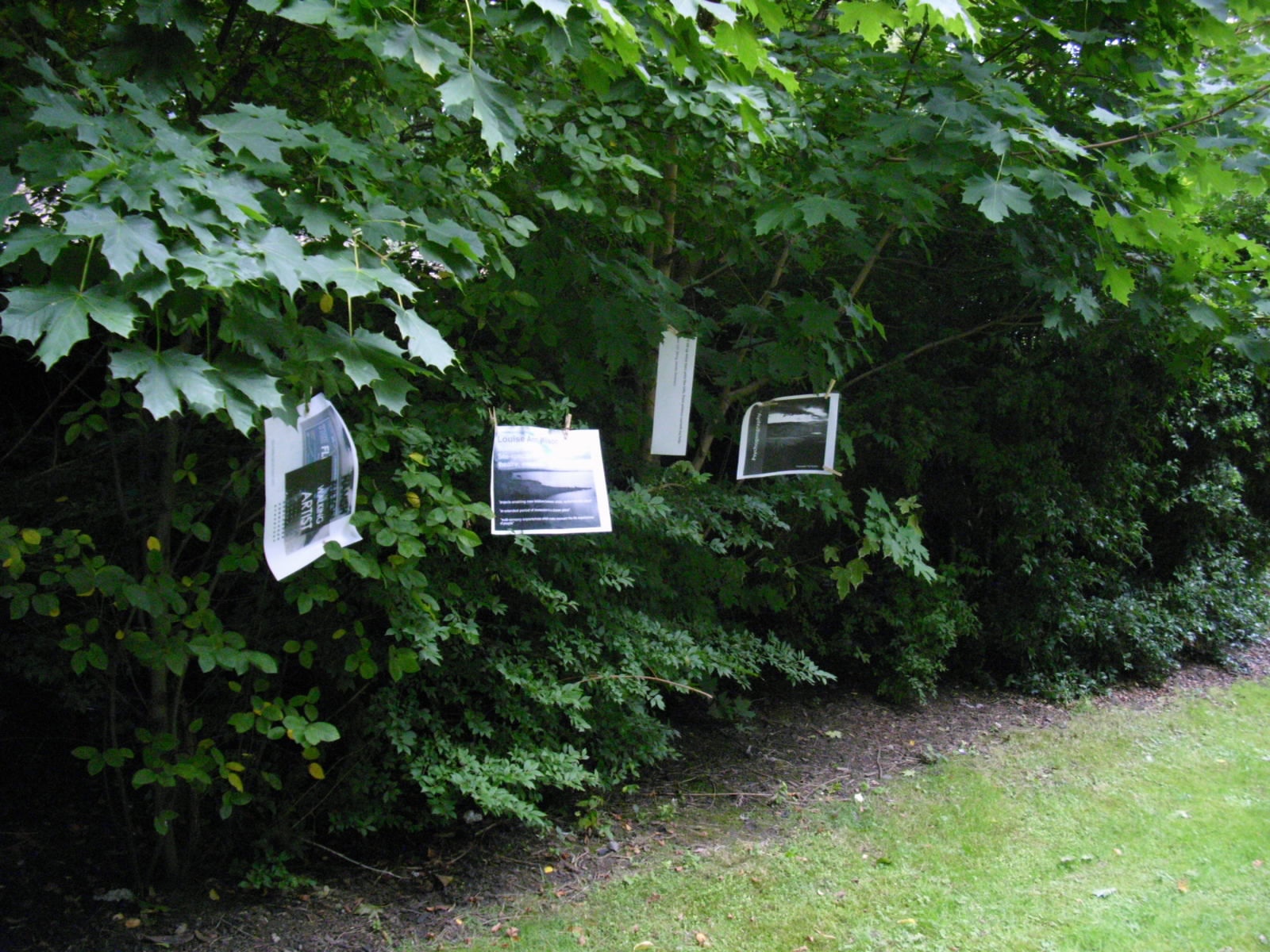
encountering food for thought on the way

After the first part of the walk, which could be likened to a sort of literature review, very much referencing key texts and practitioners in this area, we were warmed up and could start to think reflectively ourselves.
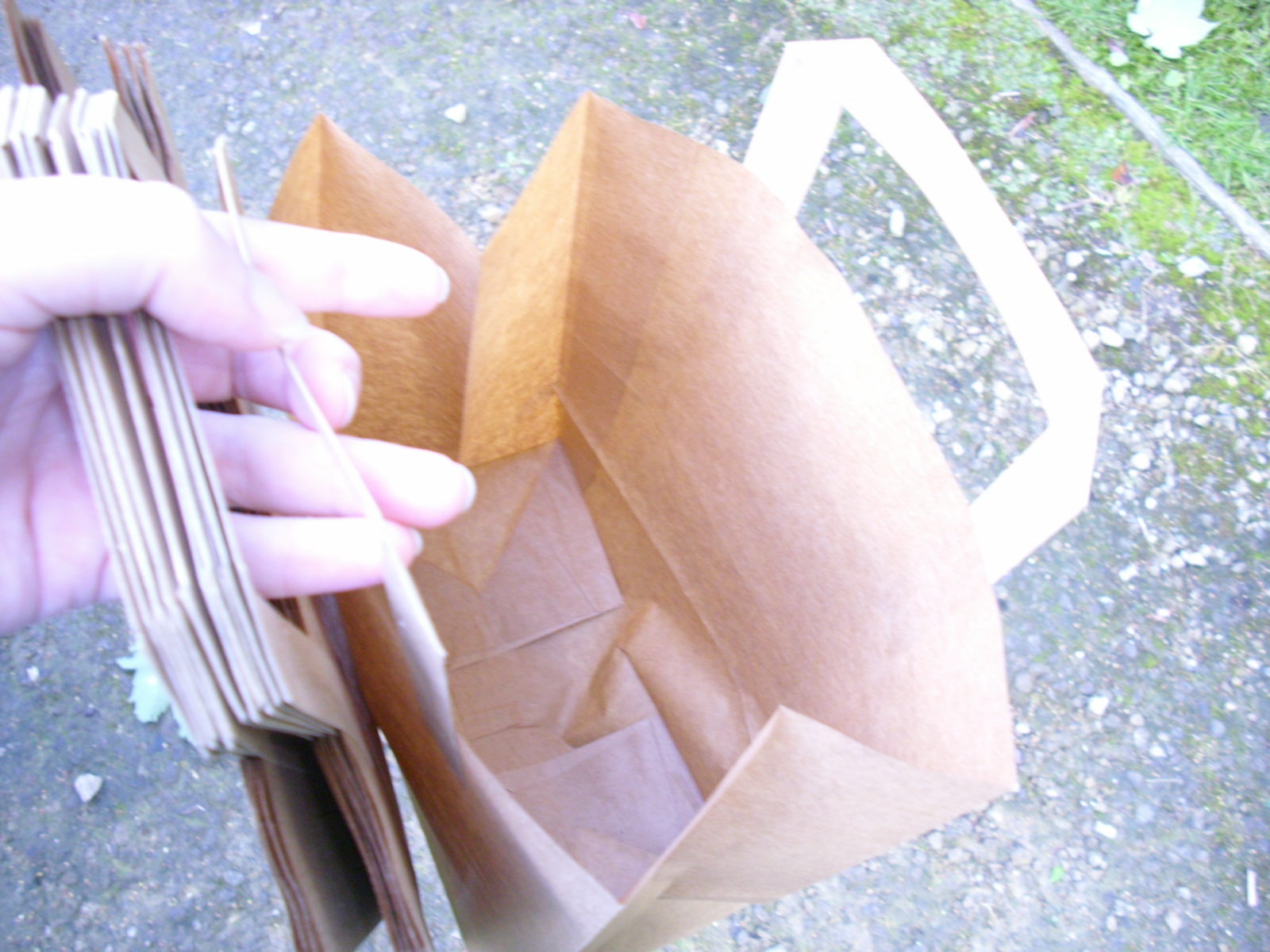
a bag to collect mementos from our journey

To help us with that we each got a paper bag, which would become filled with little bits and pieces along the way.

We thought about describing things, how to find the right words, and how important that can be when trying to communicate something.
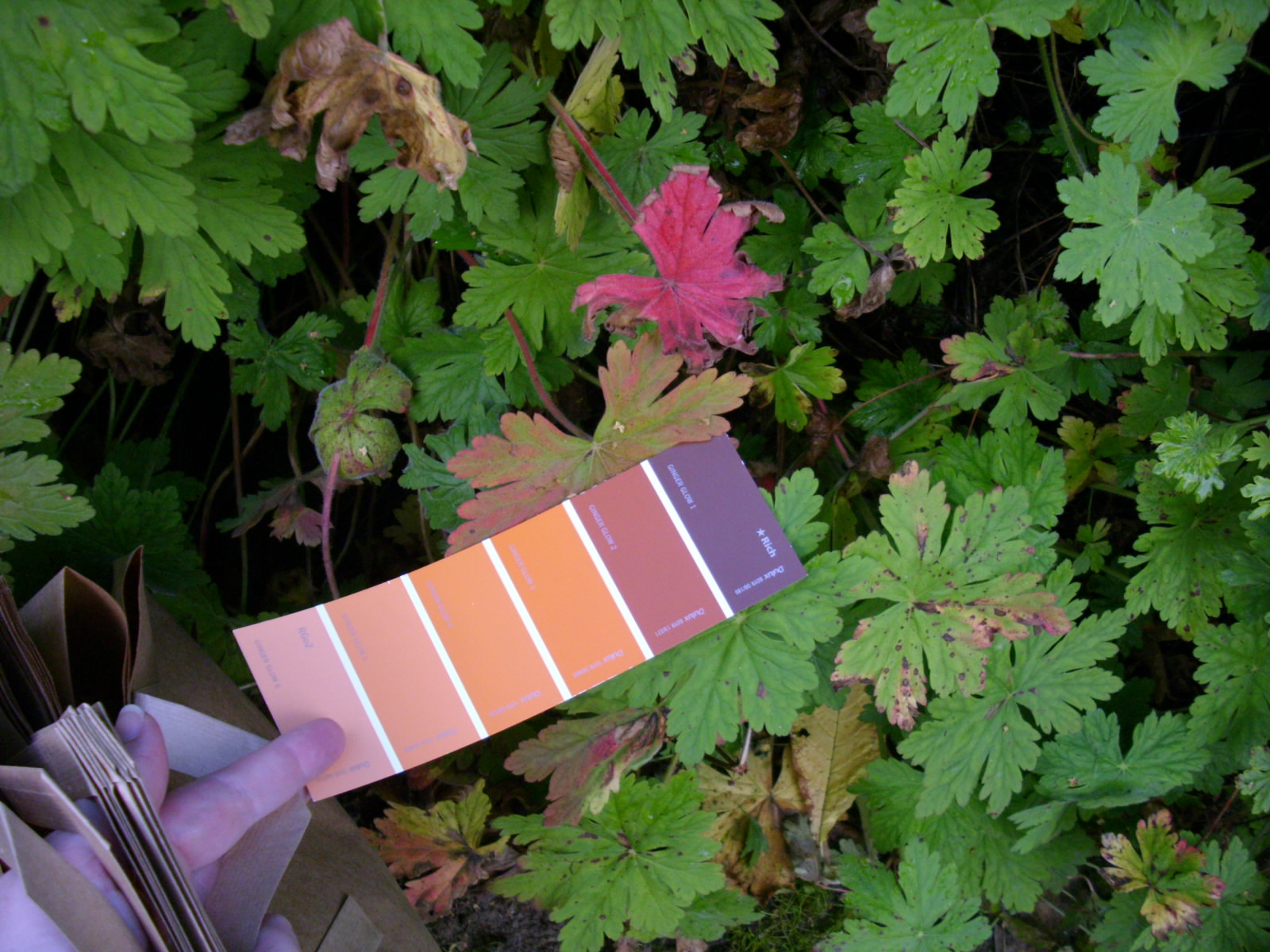
find that colour

For that we each got a number of colour charts and had to find something of that exact colour.
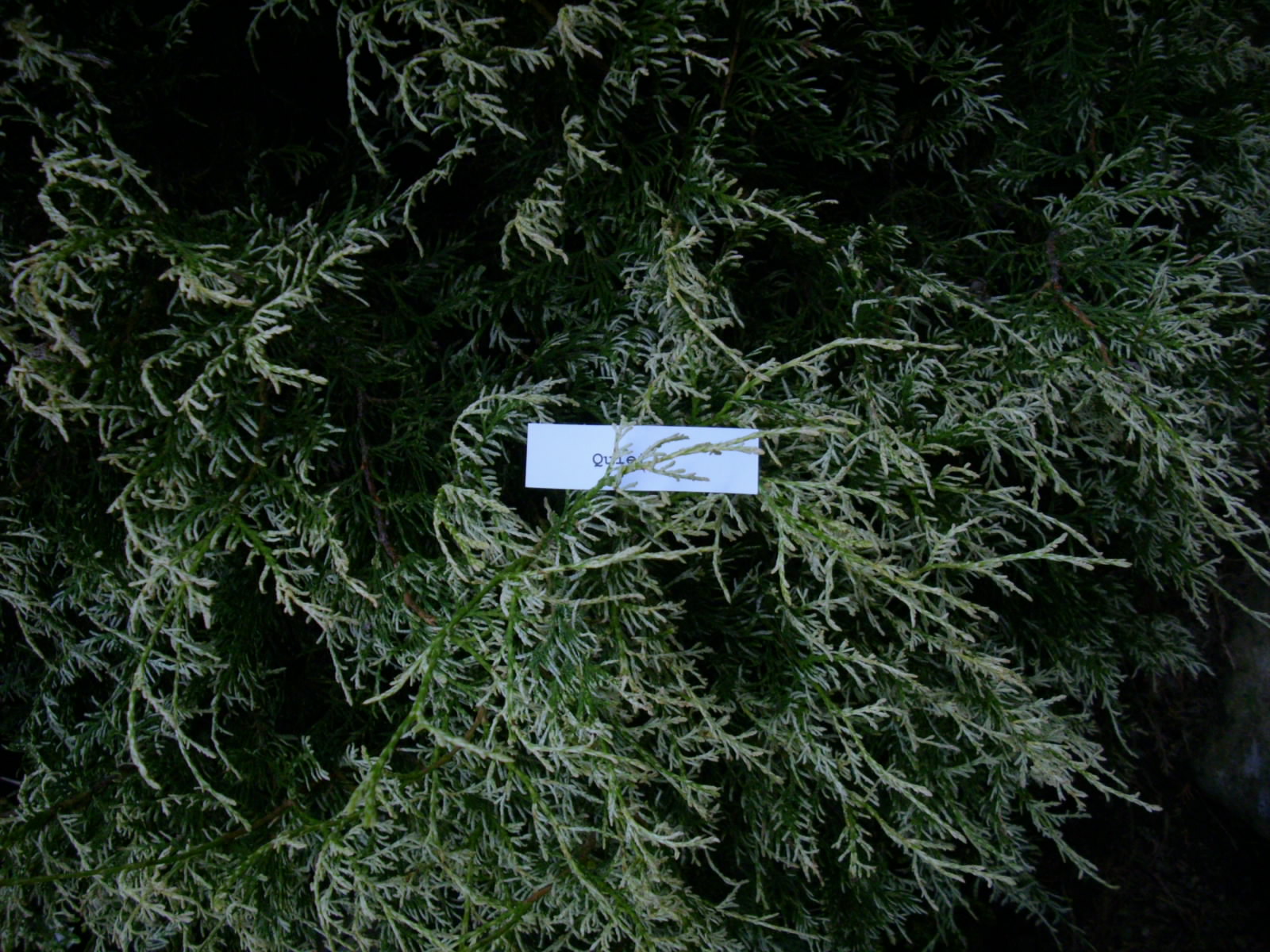
match a description

We then stepped away from the literal by matching given words with something we saw – and then explaining to another member of the group what we had found.

We thought about how framing can make a difference, to both presentation of work (or reflection), but also to focus, and how that is really well illustrated by using real frames. This links to Mason’s ‘discipline of noticing’ (2002):

To notice is to make a distinction, to create foreground and background, to distinguish some ‘thing’ from its surroundings. (Mason, 2002: 33)
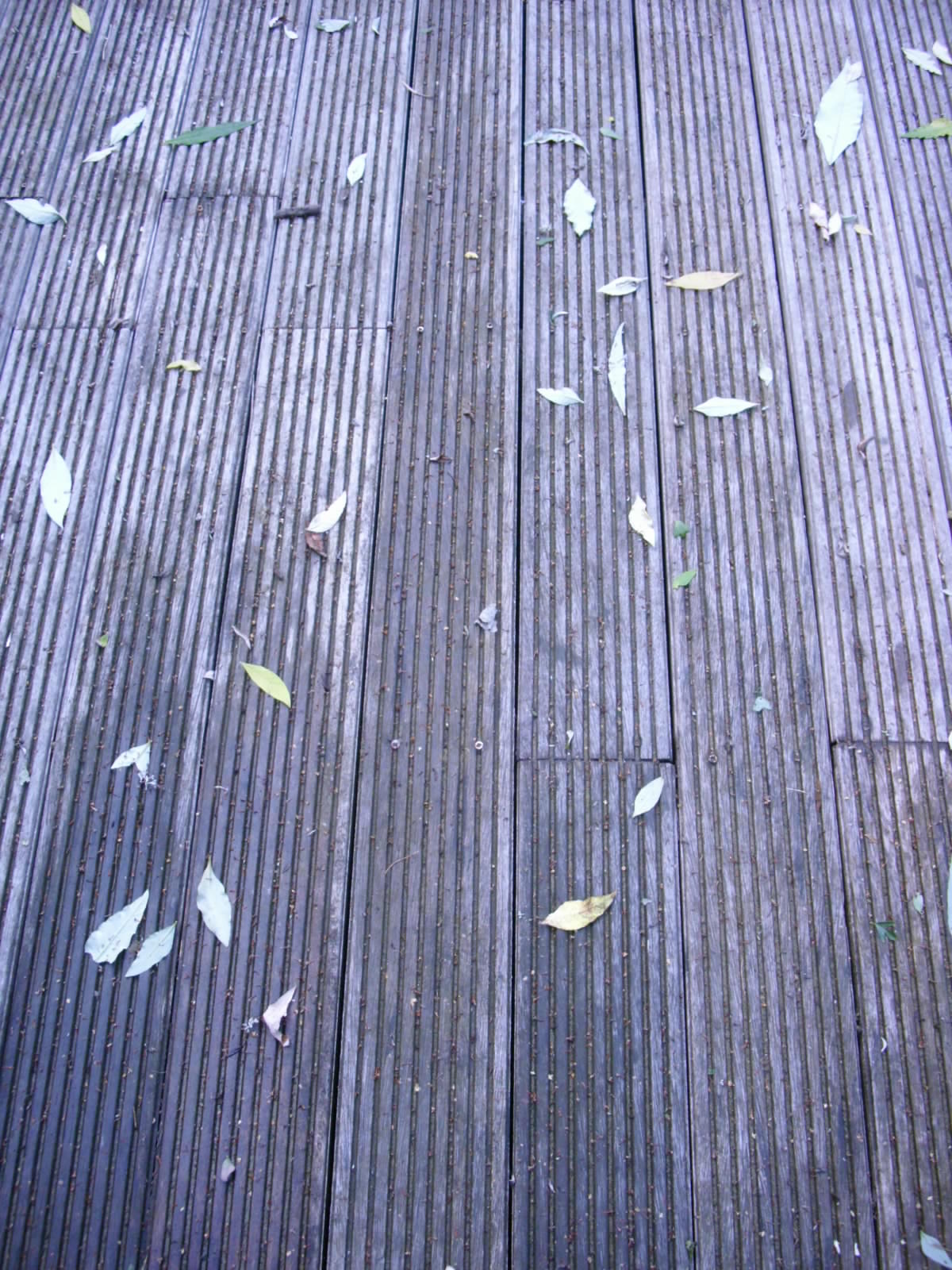
We took inspiration from the decking we encountered and thought about which ‘ridges’ were reflected in the aspirations we had to teaching. We then jotted them down on Kraft paper (also nicely striped) and pinned them up on a washing line for all to read and discuss (and as an art intervention to remain once we had passed through).

our intervention

Another intervention Sarah told us about she does with her students (although we didn’t have the time to do it), is looking for a found object that is a reflection of your teaching practice, explain to the group why it is so and then build it into an installation by combining it with the objects everybody else has found.
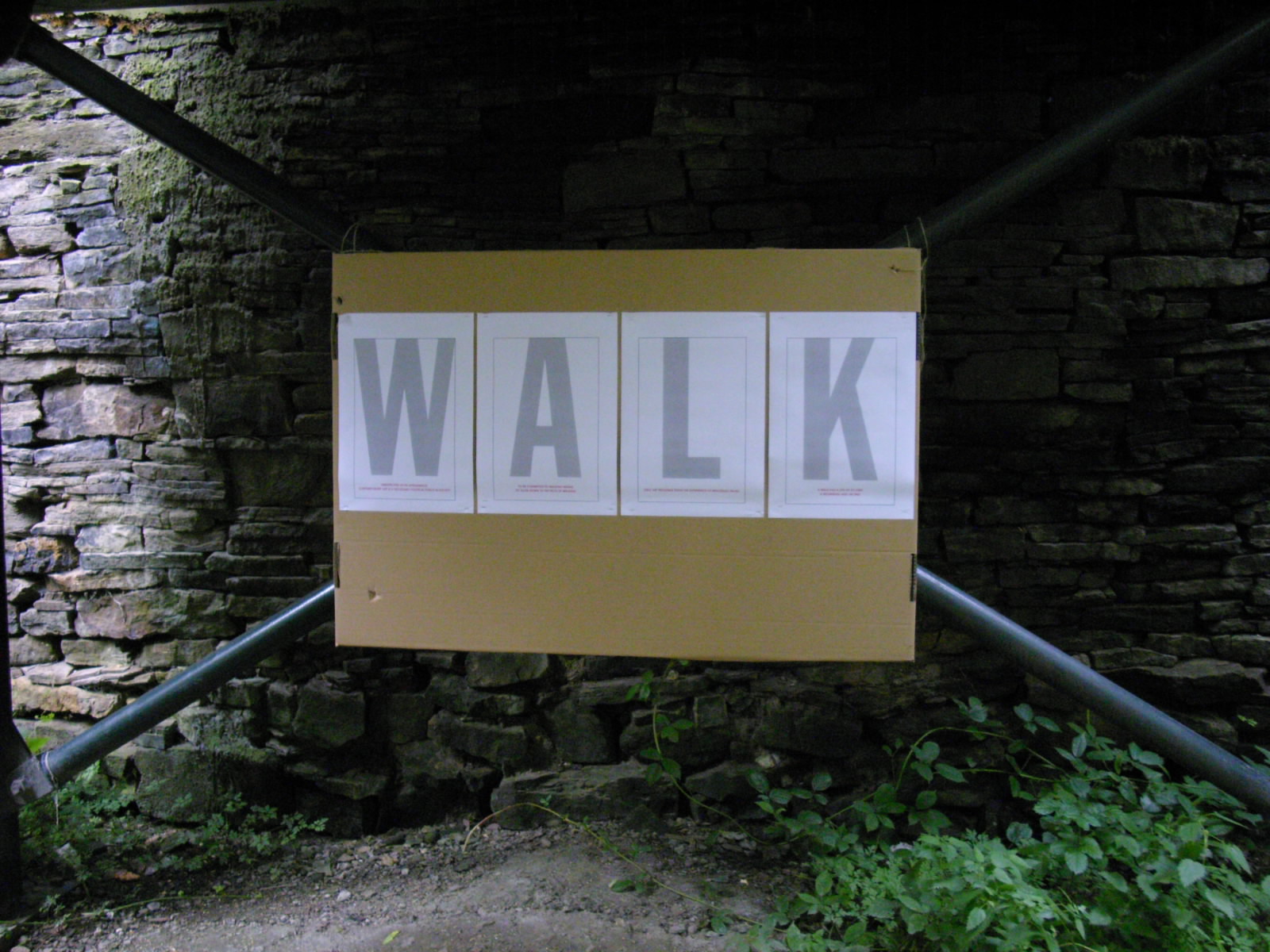
an intervention encountered along the way

As we continued our journey down the tow path along the canal, we encountered some more art, but were also encouraged to notice things that we usually don’t – what is there and so much in the background that we often don’t even realise it, like the noise of the air conditioning units, for example.

We looked at the buildings, refurbished into university buildings but still showing an industrial heritage, and thought about the history of our discipline, and how it might have changed – and what that means for our inidividual contexts.

the dividing line between surface and deep learning

We also looked at the locks, with the water standing high on one side and low on the other, a great way of visualising surface and deep learning,

a precarious balance between the surface and the deep engagement

as well as the little bridge that can be seen to both keep the two apart and link them.

At this stage we also thought about Beard and Wilson’s concept of the Combination Lock for Experiential Learning (2006) and their notion of the importance of integrating the environment, activities, senses and emotion into the learning experience.

We came to another bridge a little while later – bridges of course a good way of thinking about linking one side with the other – maybe the practical with the theoretical, but also giving a good vantage point to looking into both the past – where have we come from in our practice, how have we developed- and future – what is around that next bend of the river, where do we want to go next?
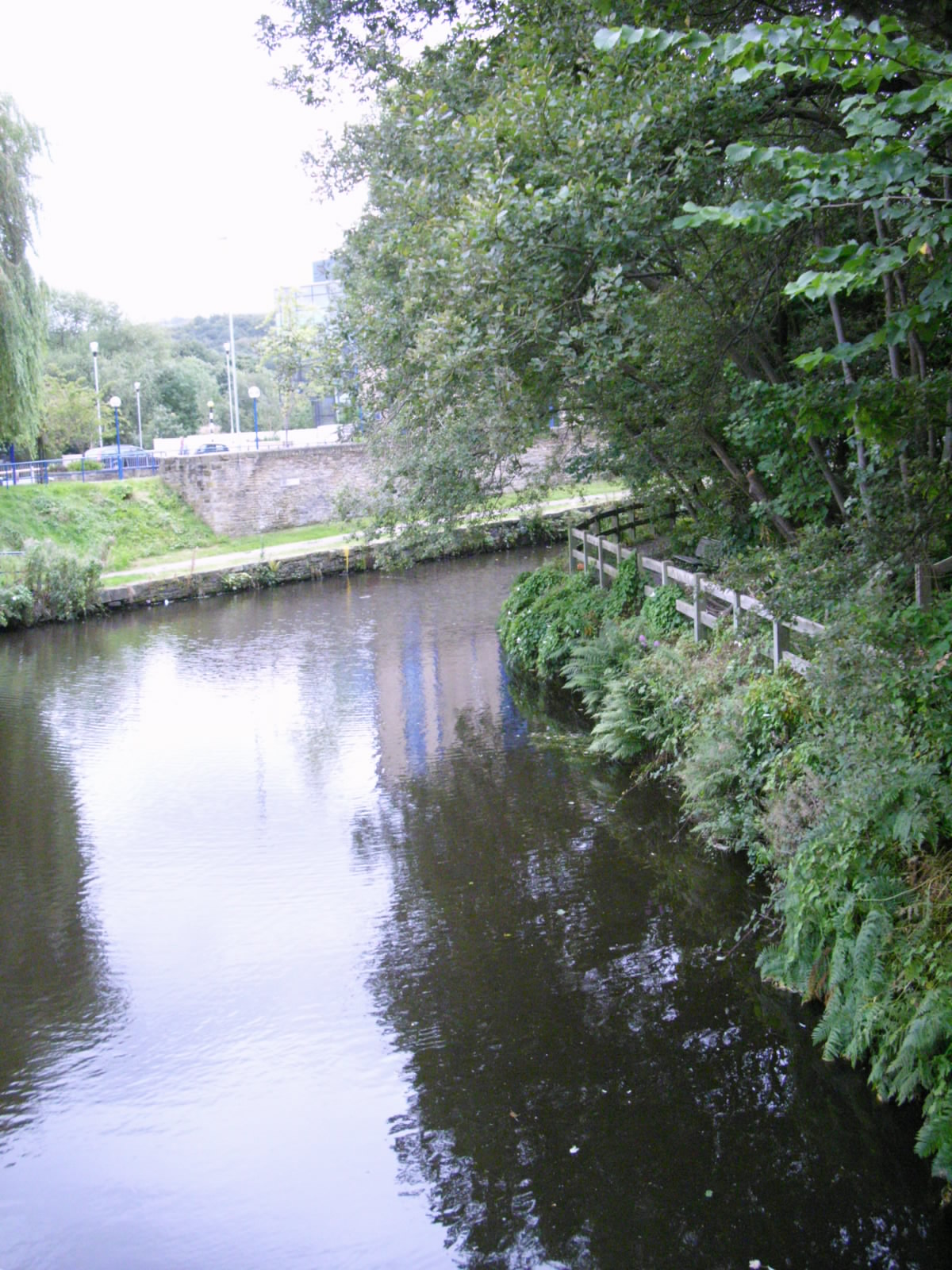
thinking of the bend in the river

Sarah gave us a poem by Philip Larking,

Bridge for the Living (1975)

Reaching for the world, as our lives do,

As all lives do, reaching that we may give

The best of what we are and hold as true:

Always it is by bridges that we live.

We also encountered stairs, which Sarah used to visualise Schon’s notion of the Swamp:
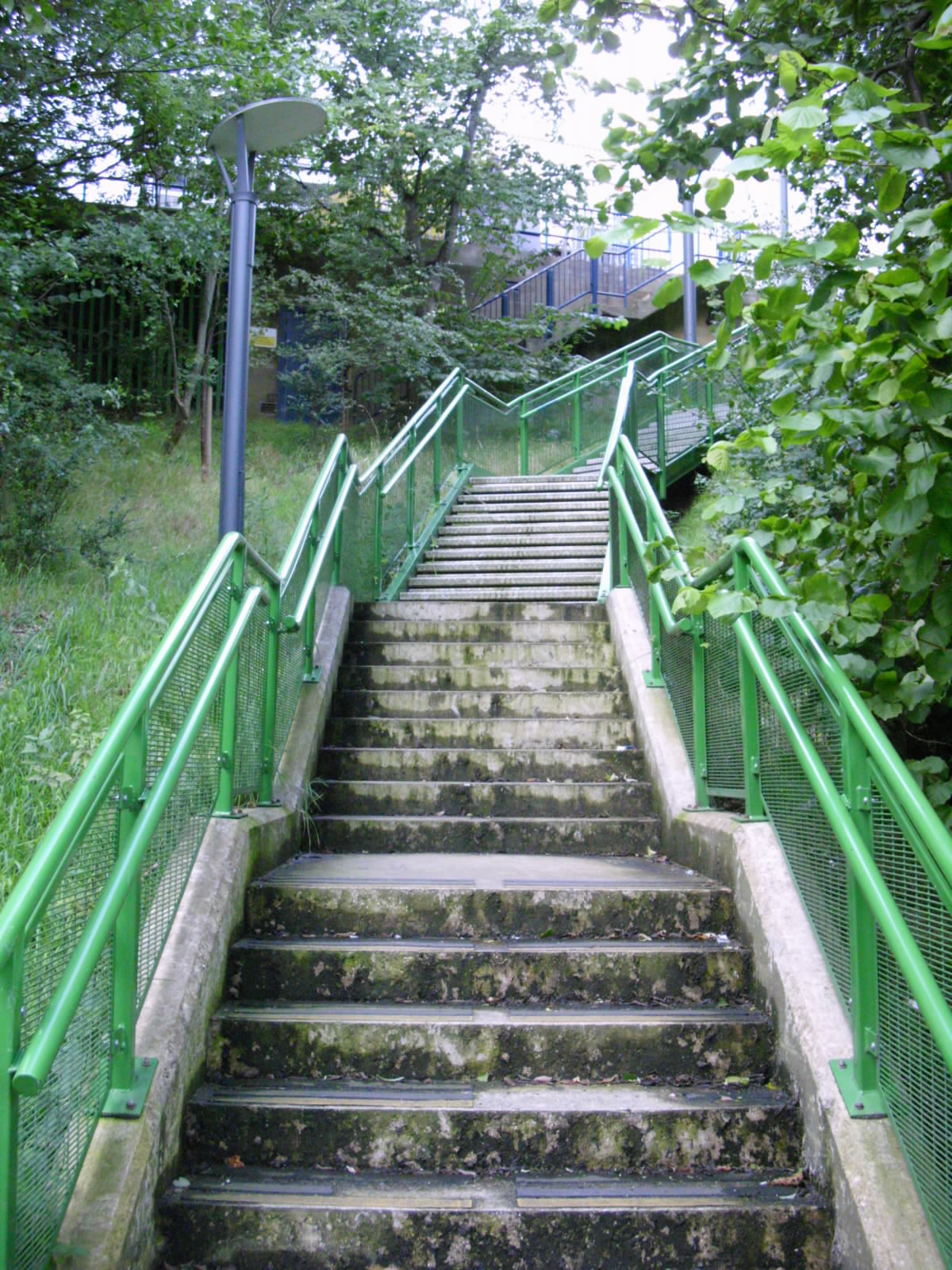
stairs leading from the messy swamp down below to the academic high ground

In the varied topography of professional practice, there is a high, hard ground overlooking a swamp. on the high ground, manageable problems lend themselves to solution through the application of research-based theory and technique. In the swampy lowland, messy, confusing problems defy technical solution. The irony of this situation is that the problems of the high ground tend to be relatively unimportant to individuals or society at large, however great their technical interest may be; while in the swamp lie the problems of greatest concern. The practitioner must choose. Shall he remain on the high ground where he can solve the relatively unimportant problems according to prevailing standards of rigour, or shall he descend to the swamp of important problems and non-rigorous inquiry? (Schon, 1987)

linking it to Fawbert’s suggestion (2004: 28) that we are all working in the messy swamp of complex classroom practice, wheras many managers and evaluators measure what we are doing from the relative safety of high ground. Sarah asked us to consider what the messy swamp in our classroom practice is…

At the end of our walk we found ourselves on benches facing steps going down to the canal, which gave us an opportunity to rest and think back on our walk, and all the different things that had been raised about reflection on our teaching practice. As it is a bit like an amphitheatre we also briefly thought about Augusto Boal’s views on theatre as the art of becoming:
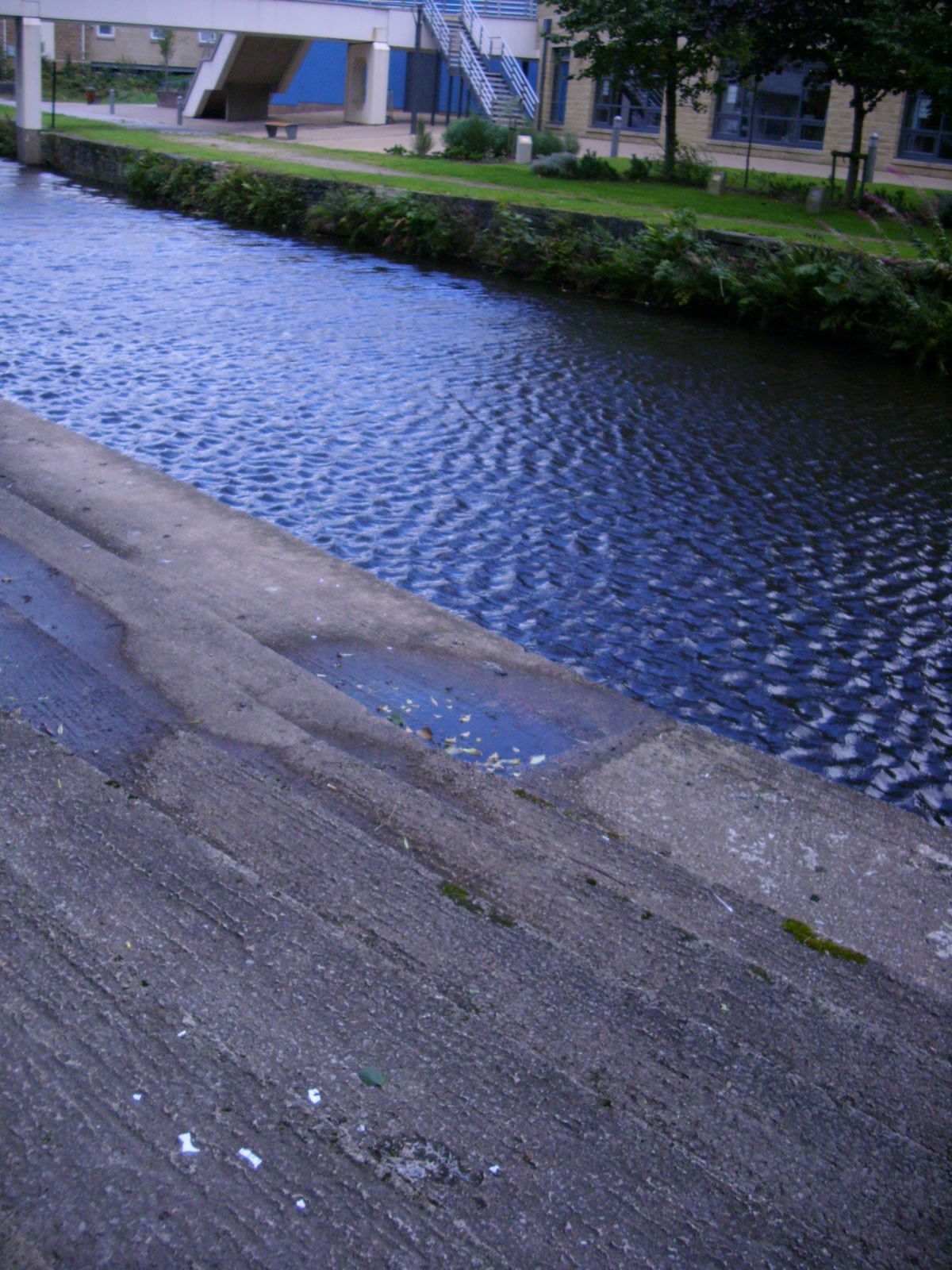
looking down on the canal as if its ever changing flow was a theatre

theatre is born when the human being discovers that it can observe itself… Observing itself, the human being perceives what it is, discovers what it is not and imagines what it could become. It perceives where it is and where it is not, and imagines where it could go (Boal, 1995: 13)

Not so far away from reflective practice, is it?

This also ties in with Palmer:

When I do not know myself, I cannot know who my students are, I will see them through a glass darkly, in the shadow of my unexamined life – and when I cannot see them clearly, I cannot teach them well. When I do not know myself, I cannot know my subject – not at the deepest levels of embodied, personal meaning. (Palmer, 1998: 2, cited in Day 2004: 52)

I went home with so much to think about, about my own teaching, about which elements I could use to make up my own reflective walk to make students think about their practice in a more reflective way. While Sarah is very lucky to have a lovely walk just outside the building she works in, I do believe that it is possible to translate the points she was making and the activities she used to develop our/the students reflective thinking pretty much to anywhere – with a little bit of care.

I’m so glad I made the trip to Huddersfield that day!
On 17th December 2012 the University of Northampton will host a workshop in the Writing in Creative Practice series, which is run in conjunction with Writing PAD and funded by the Higher Education Academy.

Titled Practicing Theory in Art & Design Education, this workshop (Programme Practicing Theory) will explore ways to build and strengthen the relationship between theoretical modules of study and studio-based learning within HE art and design courses.

The scheduled talks and activities will allow participants to share experiences and discuss best practice when it comes to overcoming the perceived separation between the lecture theatre and the studio/workshop.  Methods and approaches will be discussed that attempt to bring together simply a concept of ‘practice’

A downside of the modular nature of HE delivery is that the various taught elements within a programme of study can appear to be ‘stand alone’ with little or no connectivity between other areas of the student learning experience. This separation can be found in the institution that is the undergraduate essay. Whilst formal written assignments that draw together hypothesis, research, analysis, method and execution are excellent ways to investigate and underpin learning, for students they do all too often appear to be a dry and perfunctory task that bears little relation to other areas of study. Within the context of art and design education too often the perception is that the ‘creative stuff’ happens in the studio and workshop, whereas text is just something one is required to do, regardless.

The challenge for HE educators is to breakdown perceived divisions in order to match ‘creative expectation’ within all areas of art and design undergraduate study.  To this end the Writing In Creative Practice: Practicing Theory In Art & Design Education event will bring together colleagues from Northampton and from other institutions to consider ways, through workshop activities, conference papers and discussion, by which theoretical studies and studio practice can be effectively integrated in order to emphasise simply creativity and build a more holistic notion of ‘practice’ for students.

The attendance of this workshop is free of charge to all those interested in the workshop topic, with preference being given to staff working in HE institutions and HE in FE colleges from across the UK. Places will be allocated on a first come, first served basis. Lunch and refreshments will be provided, but travel expenses will not be covered.

For more information or to book a place, please get in touch with Will Hoon  (will.hoon[at]northampton.ac.uk)

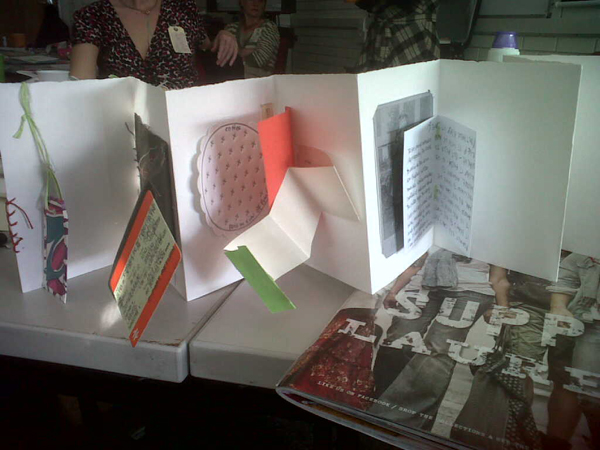
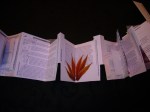
As some of you may know, after doing a variety of workshops in the UK, we (Sarah Williamson, Lisa Gold and myself) took the Tactile Academia idea to the International Society for the Scholarship of Teaching and Learning conference this October. We were accepted to do both a pre-conference workshop (Pop-up Tactile Academia – Developing Reflective Thinking through Visual Book-making) and a panel (Tactile Academia – Integrating Creative Practice into Teaching and Learning).

The idea was to allow the workshop participants to try out the idea of using collage, drawing and the concertina-book structure to keep their own notes of the conference, and thus experience the potential reflective book making has for themselves. We were also hoping that at least some of them would join us at the panel session to talk about their take on the ideas and processes explored.

I’m happy to report that both workshop and panel were well-received and that some lovely books were created during those few days. I will hopefully do a more detailed post in the next couple of days about all the other things I attended (and about how my own book progressed). Plus there will be more pictures from the workshop!

Here are the slides of the workshop: Pop Up Tactile Academia Canada Workshop Oct 2012

A long overdue post…

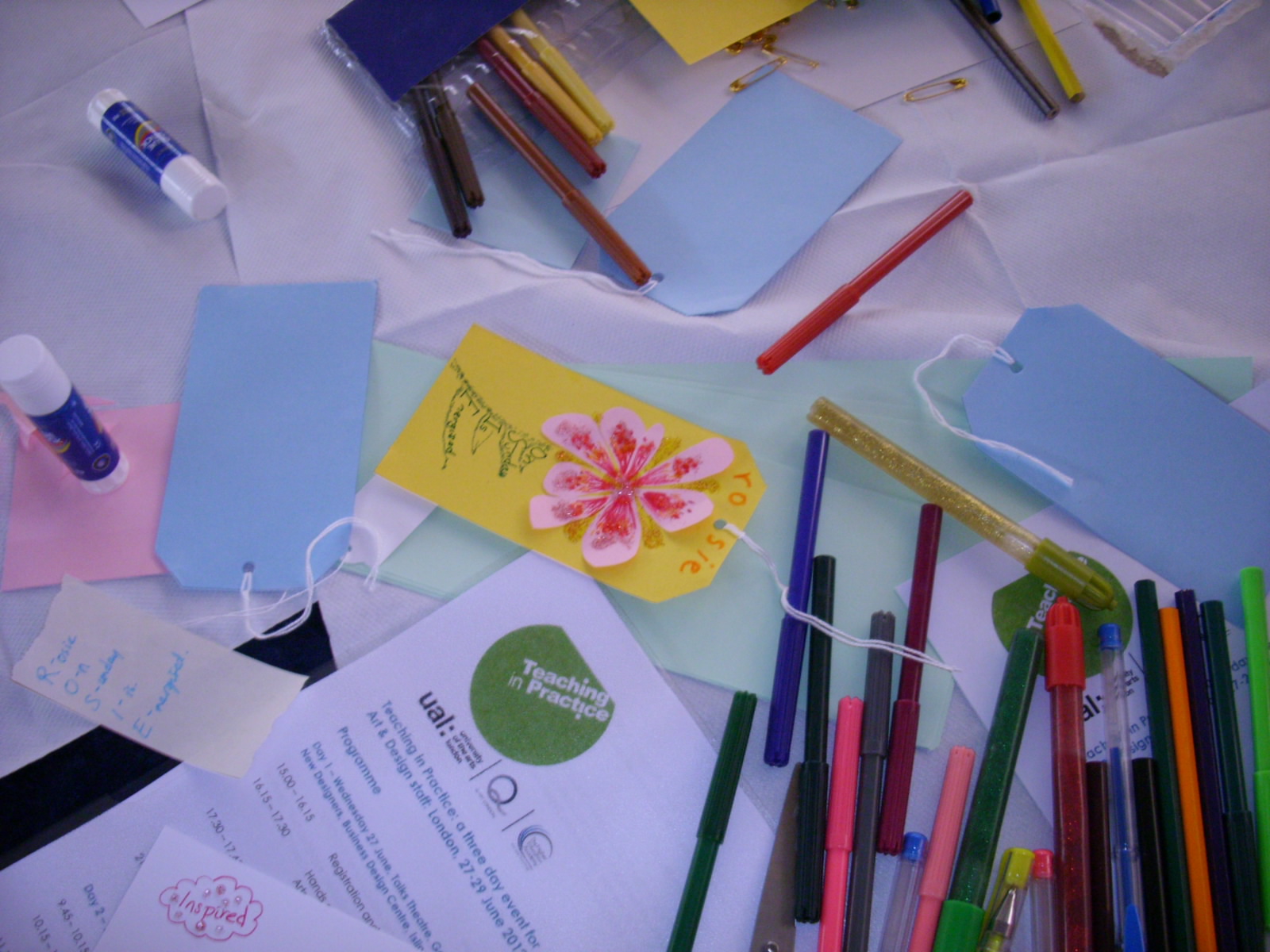
icebreaking through making name tags

At the end of June I went to the Teaching in Practice event, which was three days of Art and Design teaching staff getting together at different venues to network and talk about teaching in practice. Myself and Pat Francis had been invited to do two sessions, one on the first day as an ice-breaker and one on the second day to particularly get people thinking about the reflection-THROUGH-action that making provides.

the glue sticks came out again

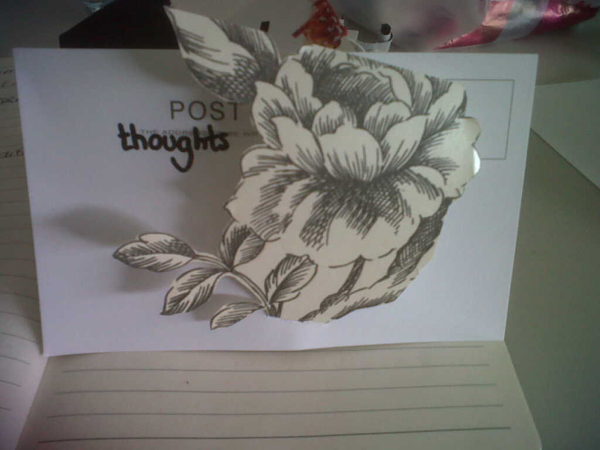
One of the key formats we wanted to concentrate on was the use of postcards to focus thought, take notes and provide feedback, so everybody got a pack of postcards to utilise throughout the event, and we encouraged people to write/draw/collage their feedback down as well on self-adressed postcards, which I took home with the promise to mail them out in early September to remind people of the experience they had. (And yes, I did do that a couple of days ago.)

The first day was hosted at the New Designers 2012 exhibition, so we had the chance to see the show as well, and included a welcome by Linda Drew celebrating the launch of the Teaching in Practice event, which will hopefully become a regular feature on the HEA calendar.

Day two was taking place at the Garden Museum, a fabulous space (with some very nice food), particularly as we were lucky with the weather so the first workshop in the morning, Garden of specialist language: Ars cesura vs. art Critique led by Sarah Rowles and Giles Bunch of Q-Art, actually let us take over the garden as we explored ways of presenting work and the ‘crit’ that is often so important in teaching studio-based disciplines.

The keynote after lunch was given by Professor Juan Cruz, the director of the Liverpool School of Art and Design at Liverpool John Morres University. It was titled ‘Hunting in Packs’ and can be seen here (plus a video montage of the whole event).

The last workshop of the day was facilitated by Ellen Sims and Kirsten Hardy, and was exploring the UK Professional Standards Framework for teaching and supporting learning. There were some insightful discussions of the new HEA framework re the new different stages of fellowship – and why we should try to get accredited!

Day three was held at the Sackler Centre at the Victoria & Albert Museum. We were treated to two keynotes, one by Mark Craweley, the director of Widening Participation and Student Progression at the University of the Arts, London with painter, educator and curator Kimathi Donkor, the other by Leanne Manfredi, the programme manager responsible for Higher Education and Creative Industries at the V&A.

After a refreshment break James Corazzo, Senior Lecturer in Graphic Design at the University of Derby, led a workshop intriguingly titles ‘Teach less, Learn More?’ in which he explored ways of actively engaging students by making them get out there are try stuff rather than read or hear about it and stick to the drawing board.

The evening ended with the opportunity to networ as well as visiting the British Design 1948-2012: Innovation in the Modern Age exhibition at the V&A, as well as enjoying the Friday Late at the V&A event Un-built, which explored the interplay between architacture and the visual arts.

By the end of it I was exhausted, but I hope that it’ll be repeated next year so I can do it again! I also came home with a stack of postcards to myself (plus the feedback mentioned above), but that might be a later post.

About a month ago (apologies this post has taken so long, I have great plans of writing up some more events from last month very soon!) I was lucky enough to go down to Bournemouth to attend the HEA funded workshop on the undergraduate research symposium. It was a packed day (with the opportunity to have a peak at the final degree show, I particularly was taken by the model making) at the Arts University College at Bournemouth.

After the formal welcome, Ruth Dineen started us off with a song of praise to the undergraduate research symposium by making the point that students need to be seen as independent from the student pigeonhole, and that this can be achieved through making them stakeholders in the Research Symposium, which with original research, research posters and presentations and Q&A discussions could really be seen as the opposite of the pigeonhole.

Kirsten Hardie and Annie Grove-White then talked us through their experiences of running these symposia for Graphic students, not just within one university, but as a point of exchange of three. They particularly highlighted the potential enclosed in making students the co-owners of such events and linking it to students’ interests and giving it professional and academic validity through having high quality keynote speakers.

What I was especially interested in was the use of posters as a way of bridging written and studio work, with its design helping to find focus and simplify ideas as well as identify new issues that need to be investigated, and the presentation of it as a ‘dry-run’ that can help develop an essay structure. Of course the poster can then also be used as a part of the portfolio, as a cover for the dissertation document, in promotional materials, etc.

We also heard a students’ perspective (which described a journey from the sceptical to the enthusiastic) and ended with discussions in smaller groups to identify challenges and opportunities before feeding back to the larger group. And there were examples of these posters to peruse, from both third and second year students.

My exercise book (which was provided) filled up with notes and ideas of how I could make this work as part of my practice of getting creative practice students to write academic texts. Could the students on the Postgraduate Certificate for Higher Education be roped in to facilitate, select, edit, organise? Could these posters be made an integral part of the conception of their written work and then showcased as part of their final degree show, at a half-time event in January, as part of a film festival for the media students? Of course in practice this might work very differently with students from disciplines that are not graphics centred, but I feel that the potential is definitely there.

Well, the second workshop that I organised for the HEA series of Writing in Creative practice was yesterday – and it went quite well again! However, as I was more involved with facilitating/presenting I didn’t actually get the chance to do my own concertina book, so don’t have any pictures for my reflection – hopefully some of the other participants will post some in the future, a first account can be found on Lisa’s blog.

This workshop was a bit more theoretical than the first one, with a key presentation by Dr. Fiona English who talked about her work with student writing and genre (published as a book I would very much recommend, it’s a bit pricey at the moment, but apparently Continuum is planning to bring out a paperback version so Fiona’s advice if you want the book at an affordable price is to call up Continuum and ask when the paperback version is coming out…).

To get delegates in the mood we started with the deconstructing/reconstructing text activity that Sarah and I had tried out (as described in the previous post) and there were some really interesting ‘poems’ created. Unfortunately the photography student I had booked again was too busy with his final degree show so I don’t have any pictures yet, but hope to provide some soon.

We then had a session with Jane Ball, academic writing skills tutor at the study skills centre at Staffordshire University, talking about ways to engage students with writing, which was followed by a lively discussion.

Fiona’s presentation was after lunch, and included delegates reading extracts from two different pieces of writing by the same student: an academic genre and the same piece re-genred into a play. We had a chance to try to analyse the shift that took place and what was gained and lost in this shift.

We ended with me sharing some ideas of writing as part of creative, practice-orientated tasks and assignments, not unlike the alternative presentations I have blogged about here previously, and I will try to post more details soon.

While we were battling the heat (the only room I could get during ‘exam season’ was in full sunlight, who would have thought the weather would turn out that nice?), it was a lively day and delegates from a number of universities were sharing their experiences and brainstorming to find ways to overcome the challenges we all seem to face.

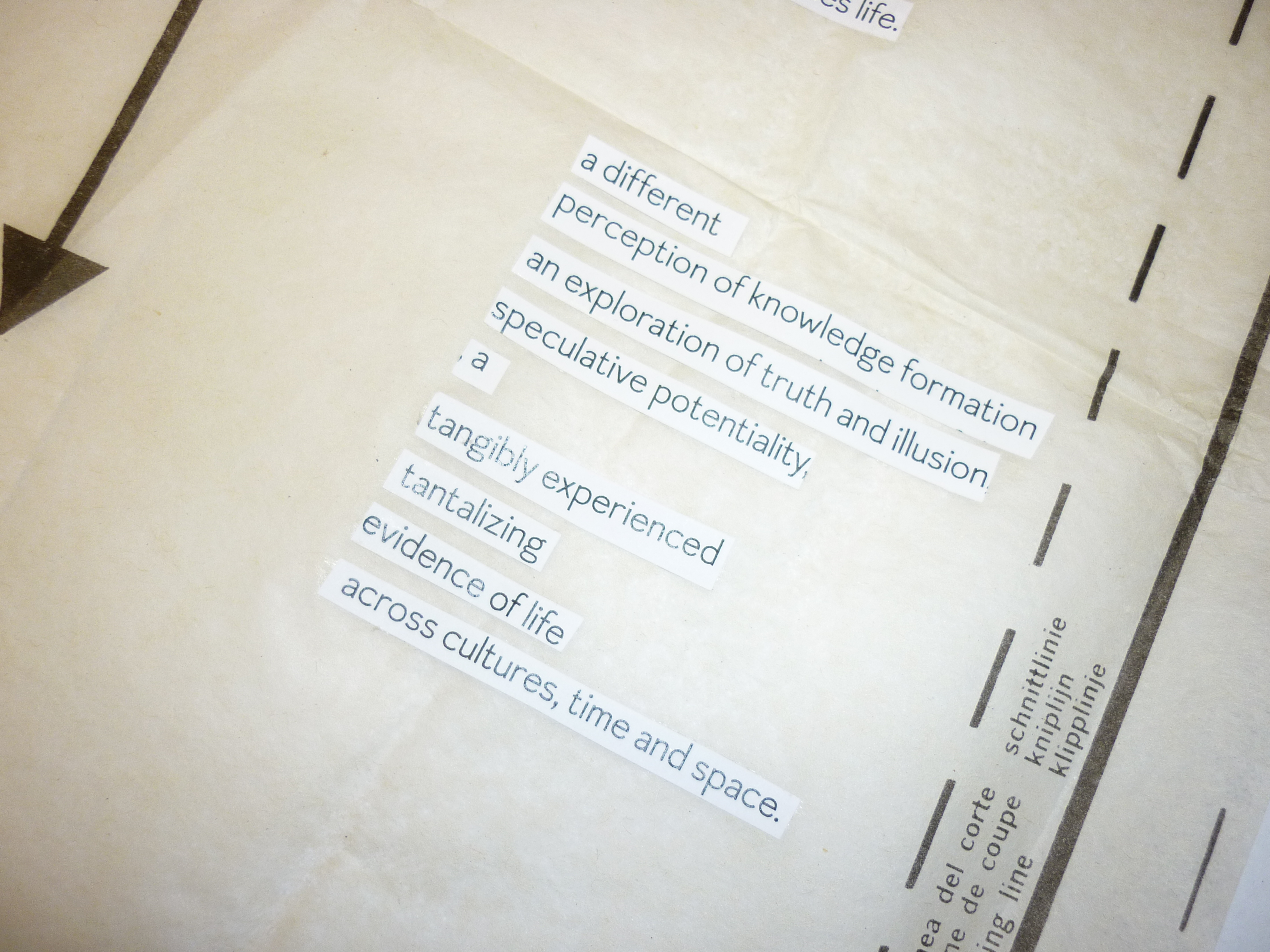
As preparation for the second Writing in Creative Practice workshop (to be held at Staffordshire University on 24th May), Sarah and myself got together to try out and explore an activity to get us started on the day. We had been inspired by the work of Mary Frances, particularly her ‘cut-up technique’ of creating poetry from existing articles and texts, and other practitioners who use poetic inquiry as part of their research.

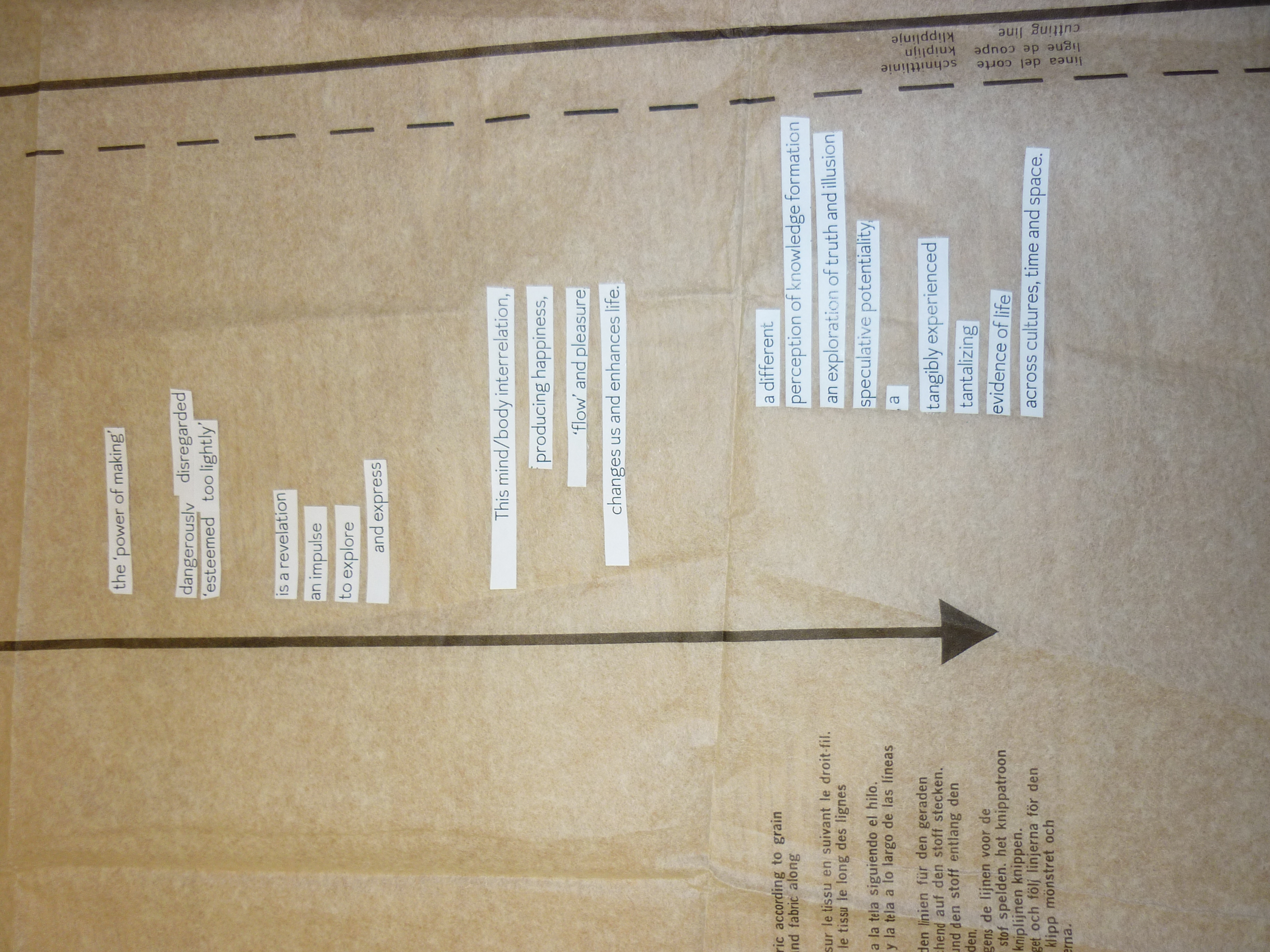
We each started with Martina Margett’s article ‘Action Not Words’ from the Power of Making V&A catalogue (edited by Daniel Charny), looking for phrases and words which caught our attention, cut them out and then reassembled them in a vaguely poetic format. These individual responses to the source material turned out to be surprisingly different as you can see in these pictures.

Sarah's poem

Alke's poem


A detail from Sarah's poem


As Sarah’s colleague Judith Kidder remarked, these outcomes were almost like wordles or word clouds, but because they were not computer generated, they did not look for the frequency of the words, but rather related to the personal meaning that phrases had – invoking ideas, images and thoughts.

Looking at each other’s work we found intriguing similarities and differences – fascinated by each other’s choices there were some phrases we had both seemed to connect to, while there were others one of us had seemingly passed by.

A detail from Alke's poem

Sharing the two works was an important part of the process, highlighting unexpected connections, making us want to revisit the original. We (with Judith) subsequently reflected on the potential this could have in our teaching, particularly the value of this as a means to get students to engage with academic texts. On the one hand tutors could prepare their own take on a text in this visually poetic way in order to entice students to give the whole piece a go. On the other students could be tasked with creating their own poetic response reflecting on an academic piece of writing – deconstructing and reconstructing a text.

P.S.: while the idea was to try this out for the workshop, we were so eager to start neither of us noted the time when we began. Consequently we have no idea how long it took, suffice to say that we ended up being quite engrossed in our making… sitting on separate tables in content silence, armed with scissors and glue stick, completed immersed in the ‘flow’ of the creative process.

I too attended the workshops and found them to be really useful. Many of our ‘direct entry’ students up here in Scotland have little or no experience of critical theory when they come to us from an HND course, so engaging with academic writing can be extremely challenging, even more so if they are dyslexic, as some are.

I hope to work with our Effective Learning tutor this coming year, when we offer a summer school for these students. I’ll take what I learned from the day and expand on some of the excellent ideas from Pat’s workshop, I’ve already suggested that they buy her book, as I have. It will be my companion all through my PhD. It’s rekindled my love of John Berger for a start!

 The collage workshop in the afternoon, I found particularly difficult to engage with; this is my own doing and no fault of the workshop itself, which was excellent, offering as it did, convincing references and arguments as to why collage is good for reflective thinking. Trouble is; this is what I’m doing as part of my qualitative inquiry for my own research; using collage to think, to articulate what I can’t say out loud, sometimes because I just don’t know but other times, it’s because it’s just too hard to find the words, let alone say them.

 So, because this method of reflection is embedded in my poor brain, I found that I couldn’t just ‘go with the flow’ and enjoy it, I took it far too seriously. So much so that I took scissors to my concertina book, cutting into its form, almost deconstructing it. (there’s a paper in there somewhere!)

Deconstruction

But all was not lost, I came home and reflected on my response and this has fed into the research. So maybe I did engage with it after all but not in the way intended? It was heartening to watch all the delegates immerse themselves in their collages; you should do it more often guys!

 I came back up to Scotland invigorated and inspired, hopefully I will be able to pass this feeling onto my students and they too will benefit from some lateral thinking.

Thanks folks!

Alison F Bell

Artist & PhD candidate

University of the West of Scotland.

Ayr.

I attended the HEA-ADM supported workshop Writing in Creative Practice: Thinking through Writing and Making organised by Dr Alke Groppel-Wegener at Staffordshire University 29 March 2012. It was a very inspiring and thought-provoking day and very relevant for my lecturing as a graphic designer supporting students in their critical analysis of the place of historical and contemporary design within culture and society.

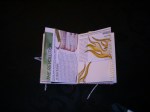
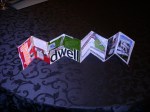
These artefacts were developed during the workshop, the book represents the process we engaged in through Pat Francis’ reflective exercises with supplied texts, images and objects. The second artefact was an attempt by me to express through collage my gratitude to Alke, Pat and Sarah Williamson.

Book of Reflection and Inspiration


Thank you card


This workshop has inspired me to continue more deeply finding a way to support my students to own their research, to better link to their practice, and to learn tactile tools to get them through the inevitable rough patches associated with writing, reflecting, researching and evidencing to develop coherent arguments. Pat’s techniques were key to giving me confidence in developing my own workshops with students, I now have concrete proposals I can make to my colleagues as we plan for next year’s curriculum.

I am also pursuing this subject for my PhD, only just begun (!), and looking at the role of making in cognitive and aesthetic development in art & design students.  Sarah Williamson’s excellent presentation on this very point left me with a number of sources (I’ve already found a few!) and a sense that “I am not alone” and that “I stand on others’ shoulders” in my inquiry.

On reflection, it is the last point that I came away from the day feeling most grateful about: here was a room full of like-minded individuals, with so many skills and experiences that I can now collaborate with as I get stuck into my research. As I left the workshop I was already looking forward to the next one!

Elizabeth

University of Chester, Lecturer in Graphic Design Theory & Practice

I attended Alke’s workshop, Thinking through Writing and Making and it really inspired me to think differently about my research.  I am a PhD student in the Geography department at Staffordshire University and my project is about mapping creative networks in Stoke-on-Trent.  As part of my field work I asked 30 participants to make a map of their network while narrating the story of what they were doing over the five year period 2007-2011.  They had one flip chart size piece of paper and four pens.  I was surprised at how easily people took to the exercise and how little I needed to direct or prompt which meant that I was doing a lot less talking than if I had gone down the more orthodox qualitative route of semi-structured interviews.  I found the process of map-making seemed to lead them naturally to reflect on their processes and to uncover their own insights.  When I heard about the workshop I thought it might give me a few ideas of how I could integrate the map-making side of the data into the thesis.  I wasn’t sure exactly how it would help but I was very keen to think about it creatively.

Although I found all the exercises very enjoyable the most important thing I took away from the workshop was Sarah Williamson’s presentation on ‘the value of making for thinking’.  In my research I had seen the practical value but I didn’t know how I was going to validate this in my methodology.    Sarah provided a list of references that backed-up my intuitive leaning towards these sorts of techniques.  I was aware of the literature on participatory methods but before the workshop I would have said that my understanding was academic.  As I made my own art-book and reflected on my learning journey, I had both the experience and realisation that what was going on for me would have been going on for the participants in the map-making exercise.  After the workshop I felt that ‘research-making’ opens up a much more creative world for thinking about and doing research. 

Linda Naughton