The workshop at the University of Northampton was yesterday and it was another very enjoyable (if intensive) day, where some really interesting projects were discussed.

D:DCIM100DICAMDSCI0453.JPG

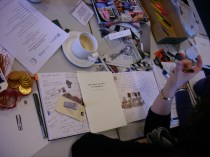
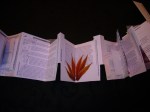
the reflective journalling starts

After our already customary icebreaker of making name tags, I started us out with a really short introduction to reflective bookmaking, based on work developed with my colleague Sarah Williamson.

Will Hoon, who had organised the day on the Northampton side, then told us about his work integrating contextual studies with practical design projects. Particularly fascinating was some student-led research that made them ‘remove the spectacle’ of advertising by taking out the visuals of advertising from the cityscape allowing the focus on just the slogans. Will also talked about how the quality of dissertation research and writing improved once 20% of the mark became allocated to the designerly presentation, speculating that the editing process the students are used to in their designs also made them edit their writing more carefully. He ended by showing two short film clips student groups had made that explained how to research and write an essay – and told us of his plans to use these films in teaching the new intake of students next year.

D:DCIM100DICAMDSCI0457.JPG

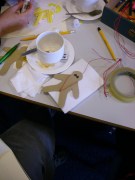
if a Tweet was an outfit – the Gingerbread Mankini

After Will it was my turn (again) to explain ways of visualising hidden academic practice. As the day was concerned with genre and re-genre-ing, I had decided to focus on The Dress-Up Doll of Formality, which is a little fun activity designed to get students to consider different ways of communicating information by thinking about the concept of ‘dressing for the occasion’. In groups participants were encouraged to design an outfit to fit a genre pulled out of a hat (in the end we had Radio News Programme, Advertising Billboard, Children’s Television Programme and Tweet) and dress up a cardboard gingerbread man (well person). I also talked briefly about alternative ways of presenting research (some of which can be found on this blog) and the 2D Challenge, which was part of my PhD research once upon a time.

After a lovely lunch, Will’s colleague Louise Bird shared her research with us, making a clear link between her practice, her teaching and her student’s projects. I was particularly fascinated by the notion of the mantelpiece as a cultural repository and Louise’s use of the shape of squares as a genre, as well as the artist’s books her students produce as part of their research.

The last speaker of the day was Fiona English, who drew the threads of the day together by talking about using genre as a pedagogical resource. She particularly highlighted a new case study, where an MA student had presented her reflection on a practical project as a transcript of a (fictitious) radio interview. Allowing us to listen to the student’s thoughts about this was of reflecting was a particularly poignant end to the formal part of the day, as it literally gave the student the last word.

D:DCIM100DICAMDSCI0464.JPG

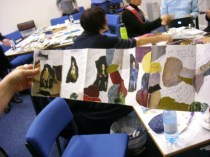
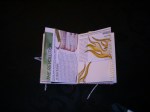
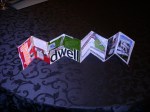
one of the finished books at the end of the day

The following brief discussion showed how well the different examples that had been showcased throughout the day fit together, and it seemed like some participants were inspired and gained confidence in thinking about genre as a way of practicing theory.

This week Pat and I met up in Falmouth for the Annual Learning and Teaching Conference hosted by the Centre for Pedagogic Arts-based Research (PedARe). PedARe actually was launched on Wednesday night at a lovely celebration at the Maritime Museum, where a lot of networking was going on amidst the sails of various vessels with mulled wine and mince pies (and some cheese, too).

The coference itself kicked off on Thursday morning with a thoughtprovoking keynote by Professor Anna Craft from the University of Exeter. Titled ‘Possibility Thinking and Creativity’, she talked about the quiet revolution that might/will be coming to education through the combination of possibility thinking and creativity, particularly in digital youth.

I was very interested in the concept of ‘meddling in the middle’ – giving students support through enabling a place for uncertainty at some point during the process of learning.  Anna also made the point that wise possibility thinking had the potential to be both gear and game changing, because it challenges what is through asking ‘what if?’ or imagining things ‘as if’. This is particularly the case when combined with the 4 P’s of digital possibility thinking: Pluralities, Possibilities, Playfulness and Participation, which potentially results in creative empowerment and wise, humanising creativity.

As Pat and I went to prepare the first of our joint sessions, it struck me how much these 4 P’s also applied very much to what we are doing, although we are not employing digital means. Pat’s session was conceived as a ‘warm-up’ for writing, giving a very brief overview of some of the methods she uses to get studnets unblocked when it comes to writing. Most of the first couple of activities she suggested were fast and furious, the latter ones could be developed over a much longer amount of time. Unfortunately we didn’t really have the time to enjoy and explore as much as this needs, but some stimulating conversations were started that hopefully will lead to participants giving this a go once they are back at work.

The session I led over lunch focused on using visual analogies to illustrate the hidden academic practice that so often gets overlooked by students. This talk featured The Butterfly Challenge, The Land- and Seascape of Creative Practice, The Underwater Iceberg, The Fishscale of Academicness and the analogy I am currently working on, The Dress-up Doll of Formality. (I promise that one of these days I will get around to posting details of all these here!)

Both of our sessions got a really good response, but at the end of it both Pat and myself were so exhausted that we couldn’t make a useful contribution to the World Cafe session that was the closing session of the event. At the very end Carolyn Bew from the HEA sgared with us her impressions of the event as drawn on her iPad. Overall it was a very enjoyable day.

In the evening some of us went for a drink, where we discussed some ideas for the future. Particularly useful for Pat and myself weas an idea we then turned into an abstract for the upcoming HEA conference in Brighton. We will propose a workshop showing the different starting points a simple button can provide, an idea that came directly out of doing our two sessions. We don’t see each other that often (actually this was only the third time we had met) so it is really nice to see how fruitful these meetings can be if there is a bit more time involved than just the workshop itself! And true to form, over breakfast this morning we were discussing an idea for a workshop in Kent, triggered by the process of editing our abstract. And on the way to the train we were talking about the special issue of the Journal of Writing in Creative Practice that I will be hopefully editing soon, and that gave me a good idea to the direction that could take….

It was a fantastic event all round, the recordings of the sessions that will hopefully be up on the PedARe website soon will be well worth checking out, especially as there was too much on to see everything!

Another long overdue post…

a well-prepared bag full of bits

On 14th September I was lucky enough to join Sarah Williamson on a reflective walk she organised and led as part of a Teaching and Learning event at the University of Huddersfield. As you may know if you are a regular reader of this blog, Sarah teaches Art and Design teachers and this walk is one of the things she does with her students to remind them of the learning they have done and to encourage reflective practice.

While it will be difficult to do this experience justice, here are some of the things I particularly remember…
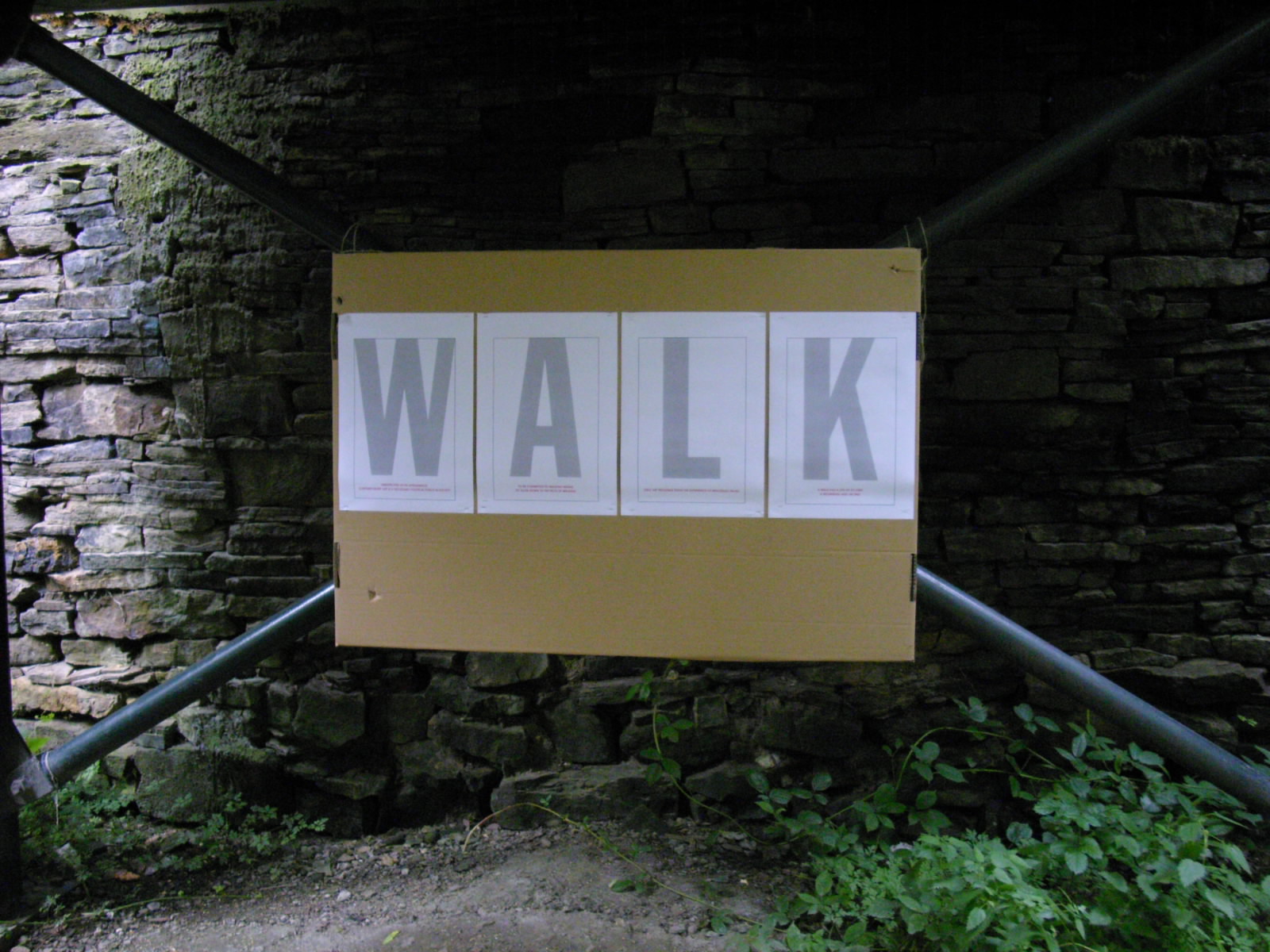
The Gateway – an entrance to a new experience

While we had a short walk to the actual beginning of the walk, once we were there, Sarah pointed out the gateway, making us aware of the idea of starting a new experience – this was not just a walk anymore, this was about us reflecting on our teaching practice.
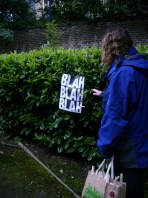
leaving blahblahblah behind us

Once we had passed the gateway and turned the corner, we were greeted by a larger print-out stating BLAH BLAH BLAH, something we were to leave behind us on this walk (and hopefully in our reflection on our practice…).

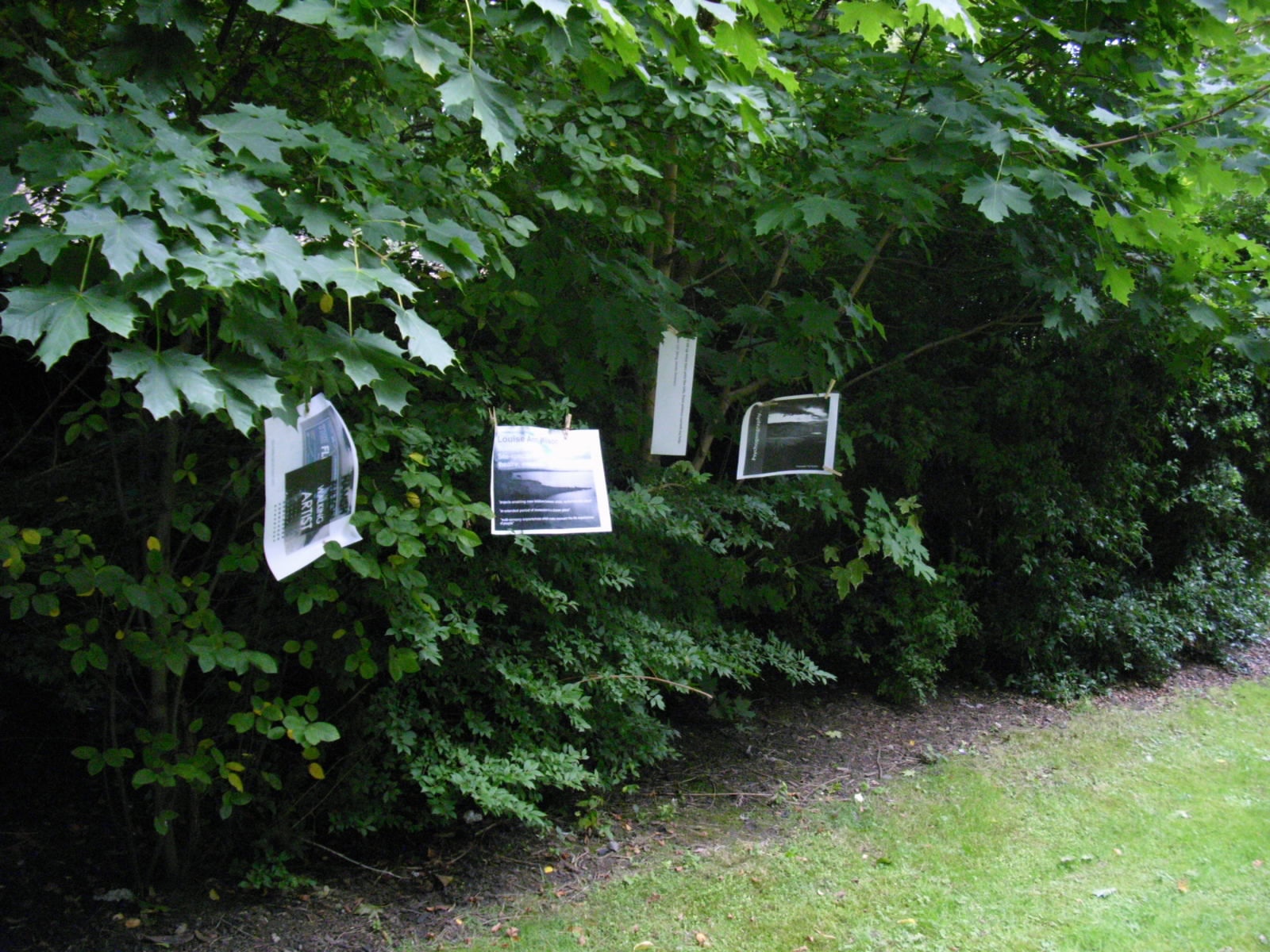
We then encountered a number of texts and quotations that had been secured to the trees and shrubs, all concerned with reflective practice and teaching – and particularly the impact that landscape and environment can have on these issues.

encountering food for thought on the way

After the first part of the walk, which could be likened to a sort of literature review, very much referencing key texts and practitioners in this area, we were warmed up and could start to think reflectively ourselves.

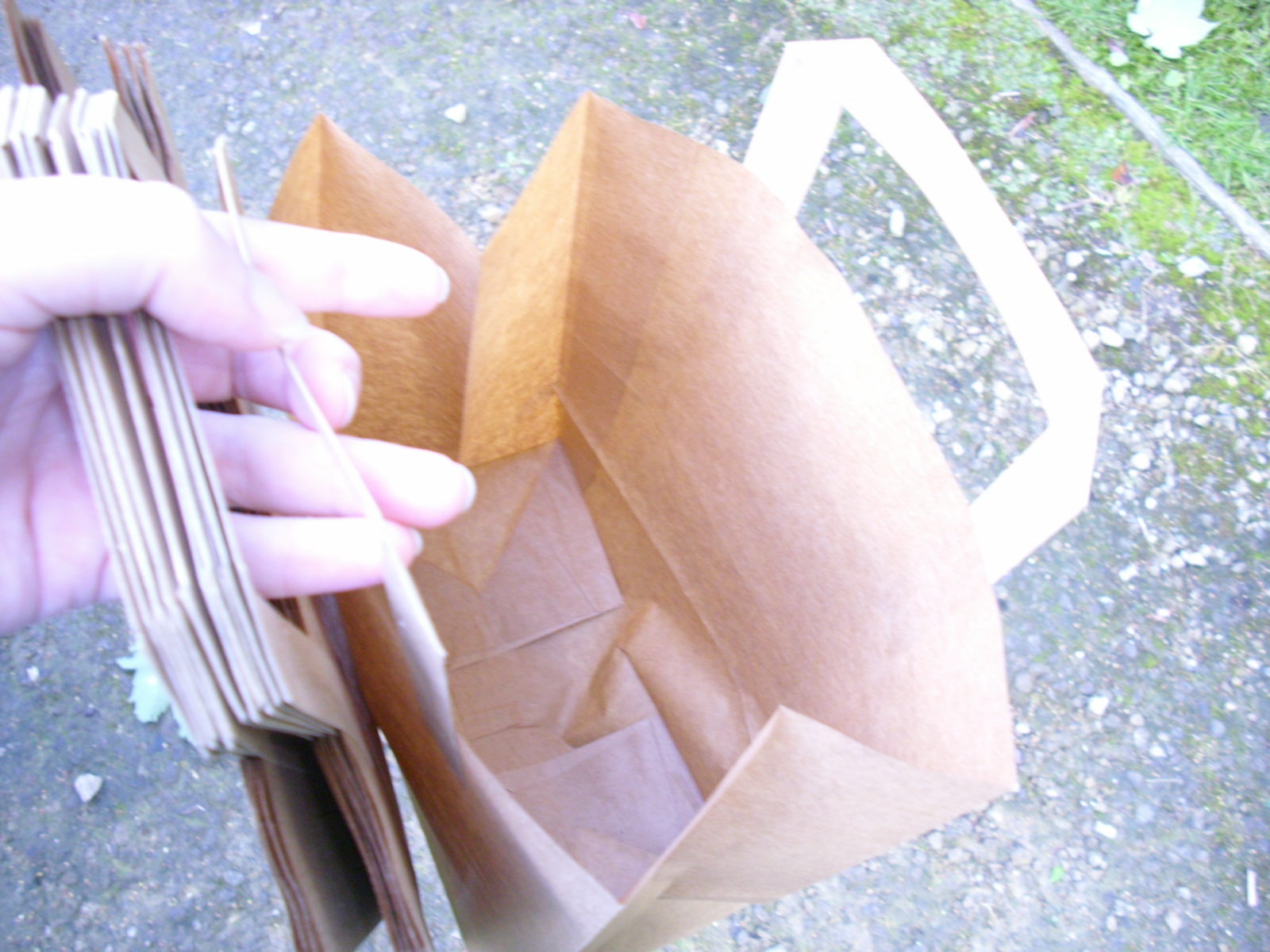
a bag to collect mementos from our journey

To help us with that we each got a paper bag, which would become filled with little bits and pieces along the way.

We thought about describing things, how to find the right words, and how important that can be when trying to communicate something.
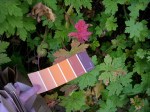
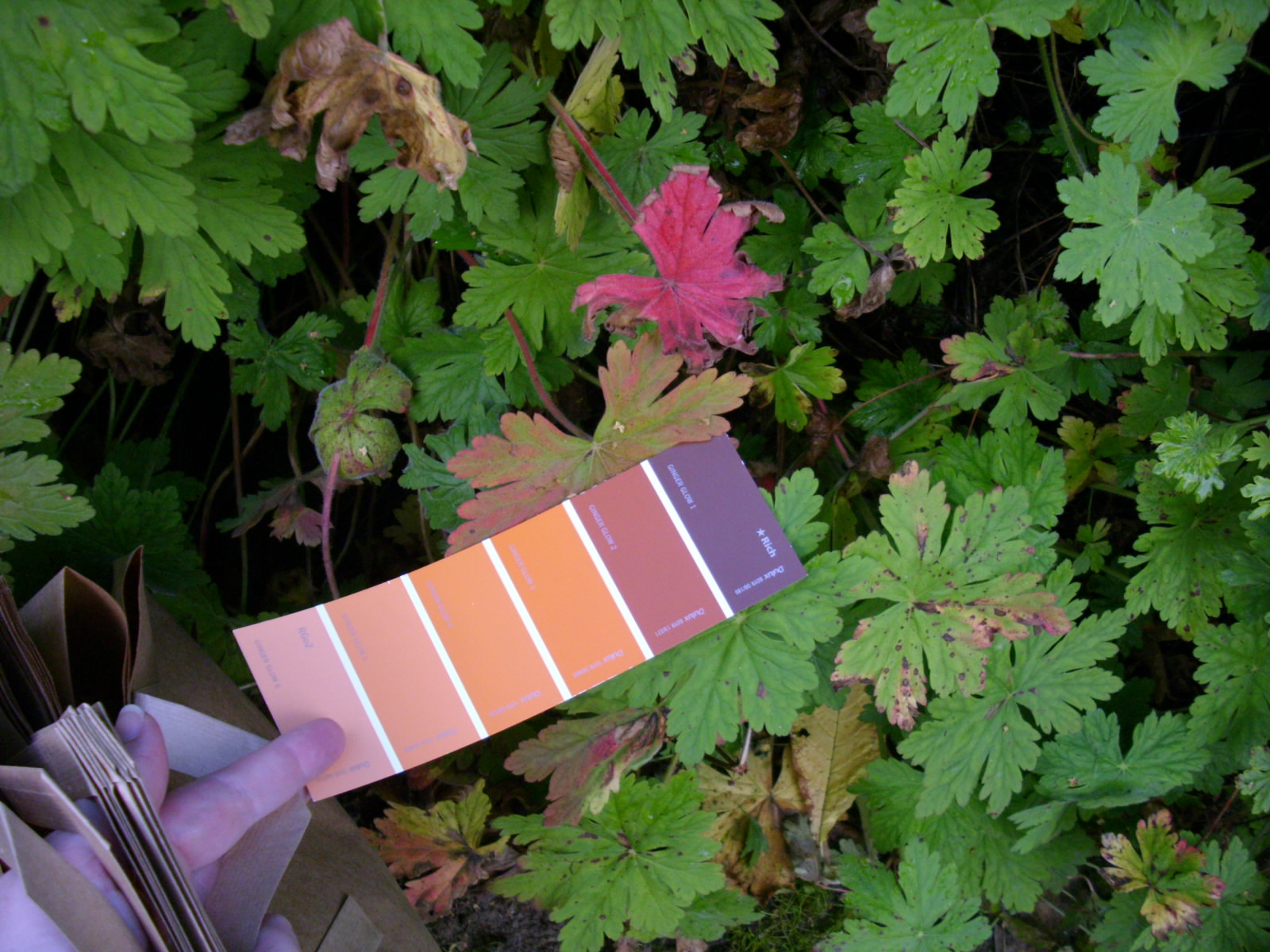
find that colour

For that we each got a number of colour charts and had to find something of that exact colour.
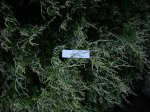
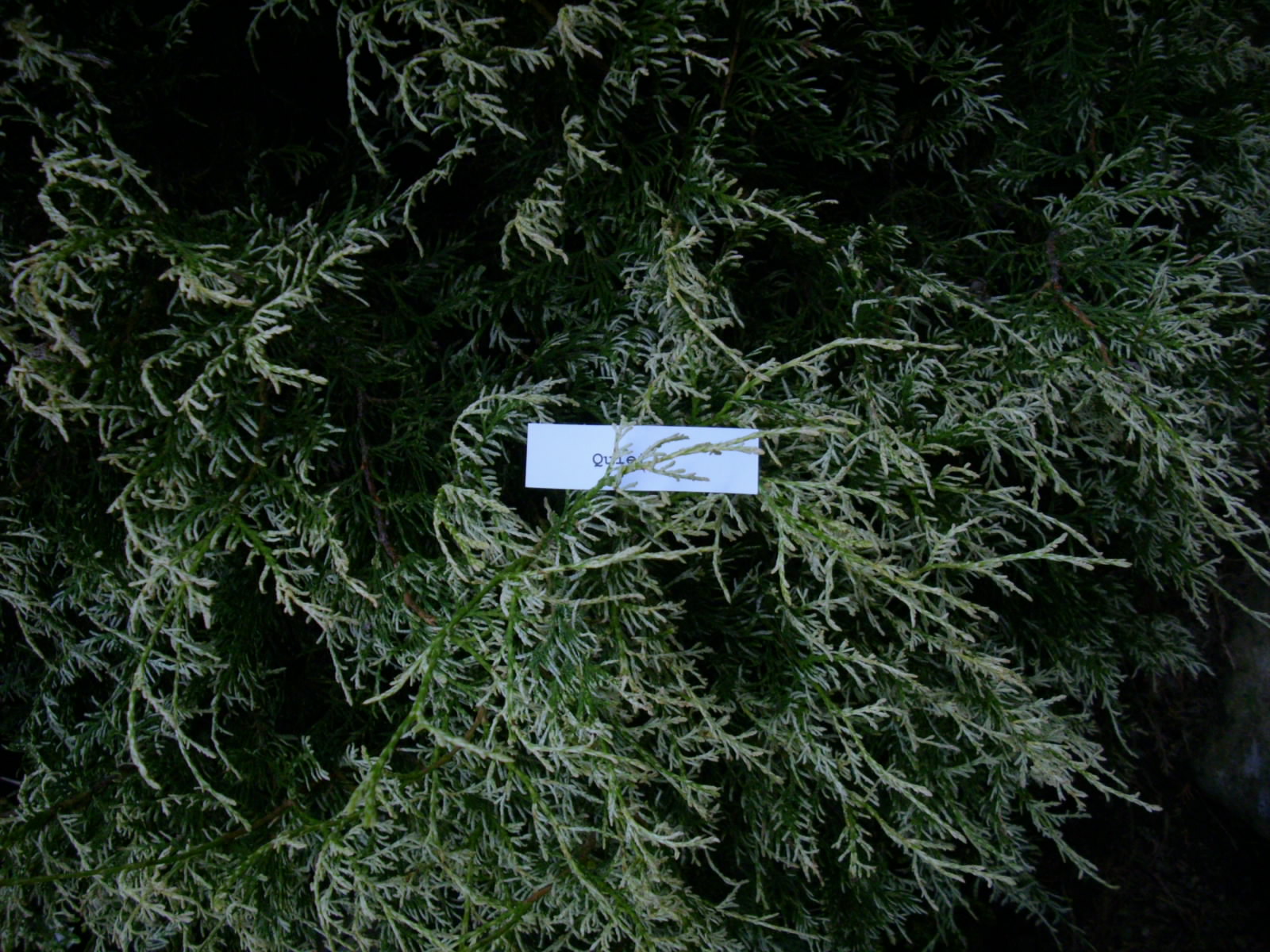
match a description

We then stepped away from the literal by matching given words with something we saw – and then explaining to another member of the group what we had found.

We thought about how framing can make a difference, to both presentation of work (or reflection), but also to focus, and how that is really well illustrated by using real frames. This links to Mason’s ‘discipline of noticing’ (2002):

To notice is to make a distinction, to create foreground and background, to distinguish some ‘thing’ from its surroundings. (Mason, 2002: 33)

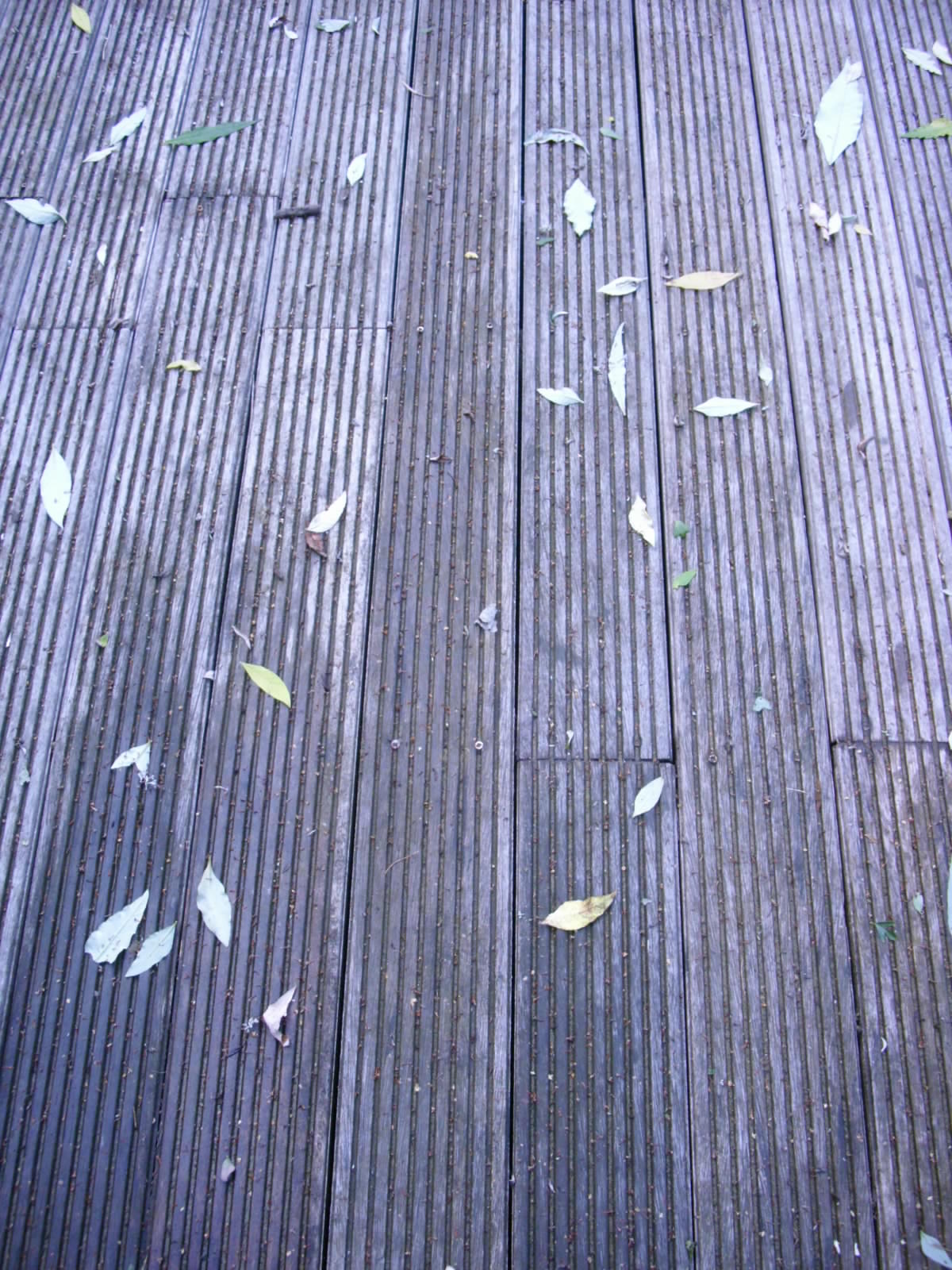
We took inspiration from the decking we encountered and thought about which ‘ridges’ were reflected in the aspirations we had to teaching. We then jotted them down on Kraft paper (also nicely striped) and pinned them up on a washing line for all to read and discuss (and as an art intervention to remain once we had passed through).
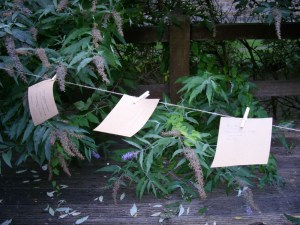
our intervention

Another intervention Sarah told us about she does with her students (although we didn’t have the time to do it), is looking for a found object that is a reflection of your teaching practice, explain to the group why it is so and then build it into an installation by combining it with the objects everybody else has found.

an intervention encountered along the way

As we continued our journey down the tow path along the canal, we encountered some more art, but were also encouraged to notice things that we usually don’t – what is there and so much in the background that we often don’t even realise it, like the noise of the air conditioning units, for example.

We looked at the buildings, refurbished into university buildings but still showing an industrial heritage, and thought about the history of our discipline, and how it might have changed – and what that means for our inidividual contexts.

the dividing line between surface and deep learning

We also looked at the locks, with the water standing high on one side and low on the other, a great way of visualising surface and deep learning,

a precarious balance between the surface and the deep engagement

as well as the little bridge that can be seen to both keep the two apart and link them.

At this stage we also thought about Beard and Wilson’s concept of the Combination Lock for Experiential Learning (2006) and their notion of the importance of integrating the environment, activities, senses and emotion into the learning experience.

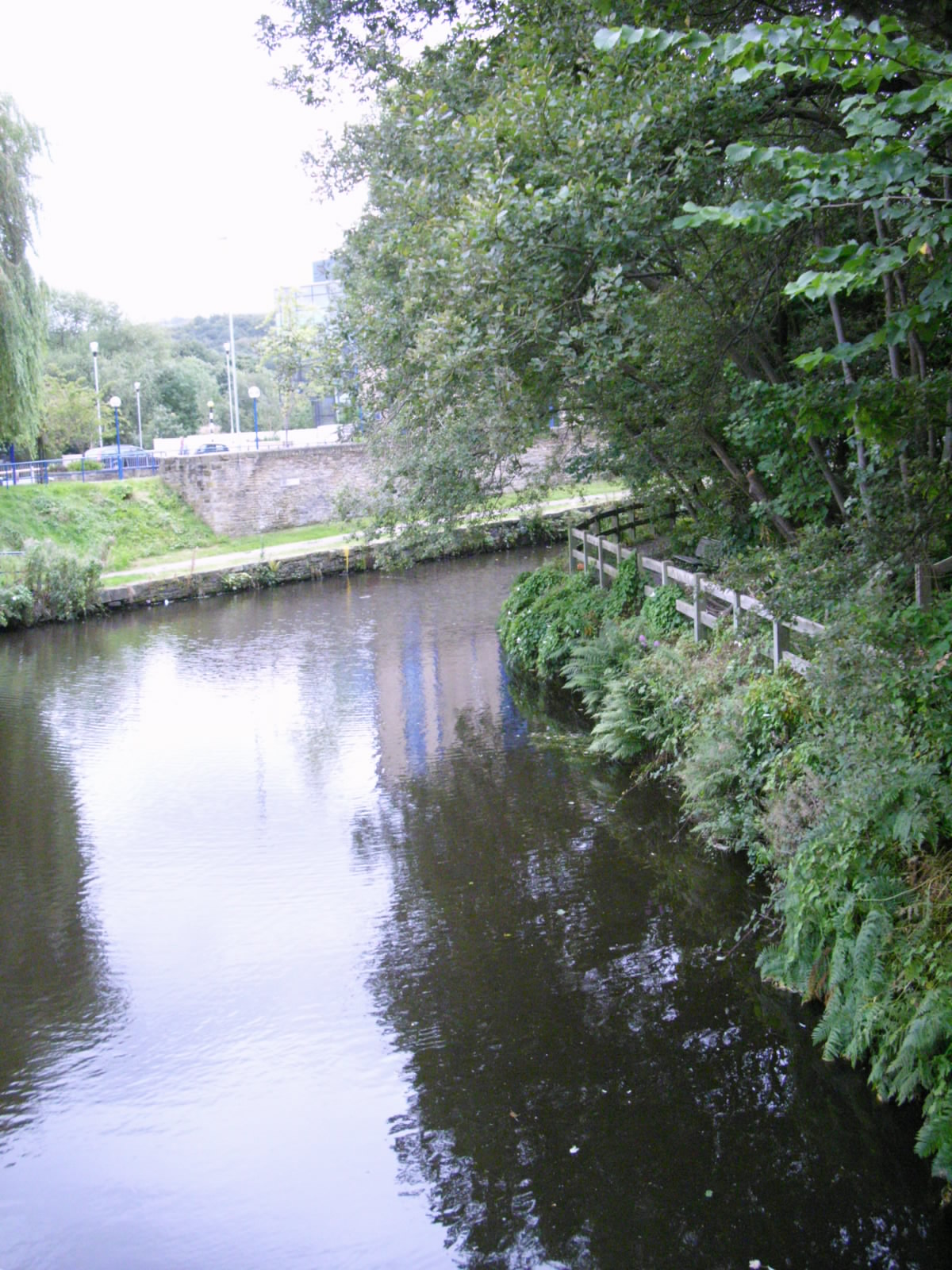
We came to another bridge a little while later – bridges of course a good way of thinking about linking one side with the other – maybe the practical with the theoretical, but also giving a good vantage point to looking into both the past – where have we come from in our practice, how have we developed- and future – what is around that next bend of the river, where do we want to go next?

thinking of the bend in the river

Sarah gave us a poem by Philip Larking,

Bridge for the Living (1975)

Reaching for the world, as our lives do,

As all lives do, reaching that we may give

The best of what we are and hold as true:

Always it is by bridges that we live.

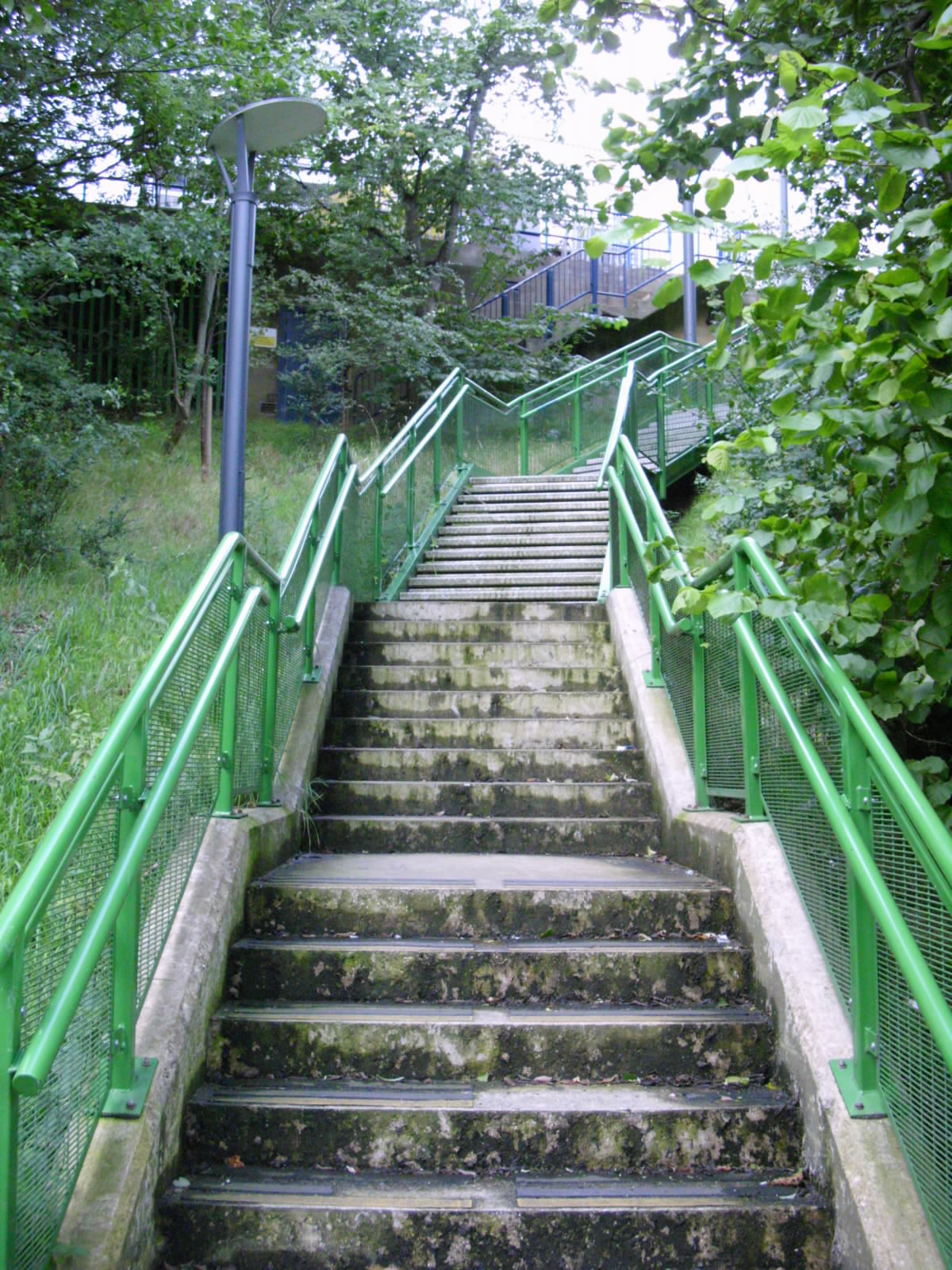
We also encountered stairs, which Sarah used to visualise Schon’s notion of the Swamp:

stairs leading from the messy swamp down below to the academic high ground

In the varied topography of professional practice, there is a high, hard ground overlooking a swamp. on the high ground, manageable problems lend themselves to solution through the application of research-based theory and technique. In the swampy lowland, messy, confusing problems defy technical solution. The irony of this situation is that the problems of the high ground tend to be relatively unimportant to individuals or society at large, however great their technical interest may be; while in the swamp lie the problems of greatest concern. The practitioner must choose. Shall he remain on the high ground where he can solve the relatively unimportant problems according to prevailing standards of rigour, or shall he descend to the swamp of important problems and non-rigorous inquiry? (Schon, 1987)

linking it to Fawbert’s suggestion (2004: 28) that we are all working in the messy swamp of complex classroom practice, wheras many managers and evaluators measure what we are doing from the relative safety of high ground. Sarah asked us to consider what the messy swamp in our classroom practice is…

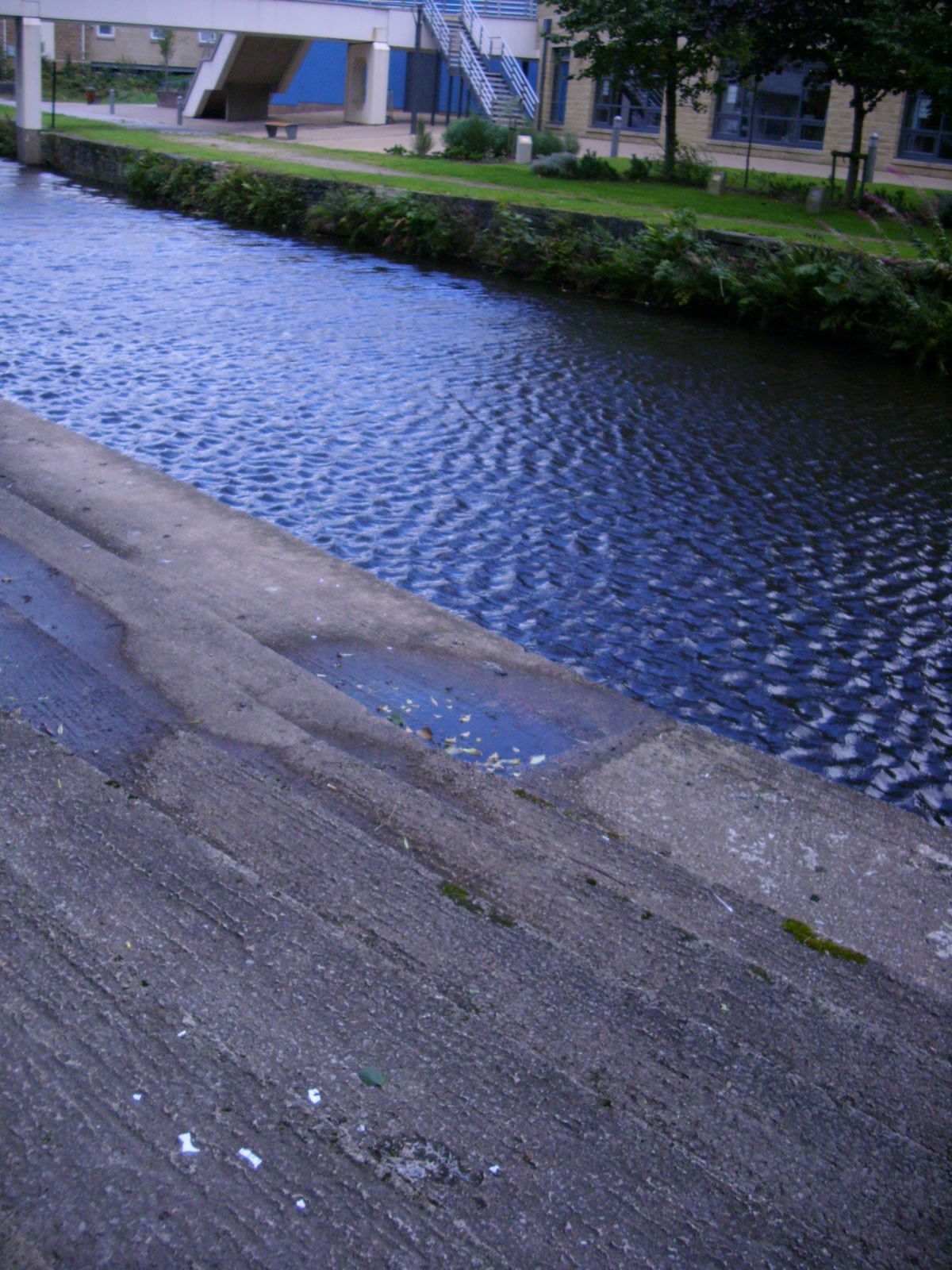
At the end of our walk we found ourselves on benches facing steps going down to the canal, which gave us an opportunity to rest and think back on our walk, and all the different things that had been raised about reflection on our teaching practice. As it is a bit like an amphitheatre we also briefly thought about Augusto Boal’s views on theatre as the art of becoming:
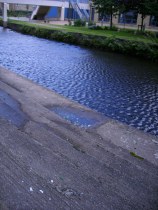
looking down on the canal as if its ever changing flow was a theatre

theatre is born when the human being discovers that it can observe itself… Observing itself, the human being perceives what it is, discovers what it is not and imagines what it could become. It perceives where it is and where it is not, and imagines where it could go (Boal, 1995: 13)

Not so far away from reflective practice, is it?

This also ties in with Palmer:

When I do not know myself, I cannot know who my students are, I will see them through a glass darkly, in the shadow of my unexamined life – and when I cannot see them clearly, I cannot teach them well. When I do not know myself, I cannot know my subject – not at the deepest levels of embodied, personal meaning. (Palmer, 1998: 2, cited in Day 2004: 52)

I went home with so much to think about, about my own teaching, about which elements I could use to make up my own reflective walk to make students think about their practice in a more reflective way. While Sarah is very lucky to have a lovely walk just outside the building she works in, I do believe that it is possible to translate the points she was making and the activities she used to develop our/the students reflective thinking pretty much to anywhere – with a little bit of care.

I’m so glad I made the trip to Huddersfield that day!

On 17th December 2012 the University of Northampton will host a workshop in the Writing in Creative Practice series, which is run in conjunction with Writing PAD and funded by the Higher Education Academy.

Titled Practicing Theory in Art & Design Education, this workshop (Programme Practicing Theory) will explore ways to build and strengthen the relationship between theoretical modules of study and studio-based learning within HE art and design courses.

The scheduled talks and activities will allow participants to share experiences and discuss best practice when it comes to overcoming the perceived separation between the lecture theatre and the studio/workshop.  Methods and approaches will be discussed that attempt to bring together simply a concept of ‘practice’

A downside of the modular nature of HE delivery is that the various taught elements within a programme of study can appear to be ‘stand alone’ with little or no connectivity between other areas of the student learning experience. This separation can be found in the institution that is the undergraduate essay. Whilst formal written assignments that draw together hypothesis, research, analysis, method and execution are excellent ways to investigate and underpin learning, for students they do all too often appear to be a dry and perfunctory task that bears little relation to other areas of study. Within the context of art and design education too often the perception is that the ‘creative stuff’ happens in the studio and workshop, whereas text is just something one is required to do, regardless.

The challenge for HE educators is to breakdown perceived divisions in order to match ‘creative expectation’ within all areas of art and design undergraduate study.  To this end the Writing In Creative Practice: Practicing Theory In Art & Design Education event will bring together colleagues from Northampton and from other institutions to consider ways, through workshop activities, conference papers and discussion, by which theoretical studies and studio practice can be effectively integrated in order to emphasise simply creativity and build a more holistic notion of ‘practice’ for students.

The attendance of this workshop is free of charge to all those interested in the workshop topic, with preference being given to staff working in HE institutions and HE in FE colleges from across the UK. Places will be allocated on a first come, first served basis. Lunch and refreshments will be provided, but travel expenses will not be covered.

For more information or to book a place, please get in touch with Will Hoon  (will.hoon[at]northampton.ac.uk)

As some of you may know, after doing a variety of workshops in the UK, we (Sarah Williamson, Lisa Gold and myself) took the Tactile Academia idea to the International Society for the Scholarship of Teaching and Learning conference this October. We were accepted to do both a pre-conference workshop (Pop-up Tactile Academia – Developing Reflective Thinking through Visual Book-making) and a panel (Tactile Academia – Integrating Creative Practice into Teaching and Learning).

The idea was to allow the workshop participants to try out the idea of using collage, drawing and the concertina-book structure to keep their own notes of the conference, and thus experience the potential reflective book making has for themselves. We were also hoping that at least some of them would join us at the panel session to talk about their take on the ideas and processes explored.

I’m happy to report that both workshop and panel were well-received and that some lovely books were created during those few days. I will hopefully do a more detailed post in the next couple of days about all the other things I attended (and about how my own book progressed). Plus there will be more pictures from the workshop!

Here are the slides of the workshop: Pop Up Tactile Academia Canada Workshop Oct 2012

I attended and delivered a paper at the 3rd Annual Conference of the International Journal of Art and Design Education in Liverpool 19-20 October 2012. Due to my lecturing schedule I was only able to attend the Saturday session where I presented my paper “The Artist Book: Making as Visual Method” to the “Creative Thinking” strand.

ekm_iJADE2012_ArtistBook

ekm_The Artist Book_paperFINAL

Here I attach my paper and my presentation which focus on the embodied knowledge developed through the development of my first artist book. The paper and book were well received, delegates appreciated looking at and discussing artefacts as so much of the conference focused on the teaching and learning of art and design subjects (and rightly and importantly so!). One delegate asked me, “What will you do now?” which is such a supportive and encouraging question. “More making, reading and writing” was what was on the tip of my tounge but I knew she wanted something more specific. I told her I was going to work more into the photographs I had taken and make more books and collages. Interesting that my reply was based on my practice rather than the theory/methodology…something has shifted in my practice and how I view the way to push my investigation further. I simply can’t wait to get back to my visual practice after the hard graft of writing the paper.

I still have my Lit Search to do though…..rather large detail to not ignore…..

The process of making, researching and writing the book and the paper have been richly rewarding and have pushed my thinking and practice much further along. I now feel my doctoral study is practice-led rather than practice-based.

A long overdue post…

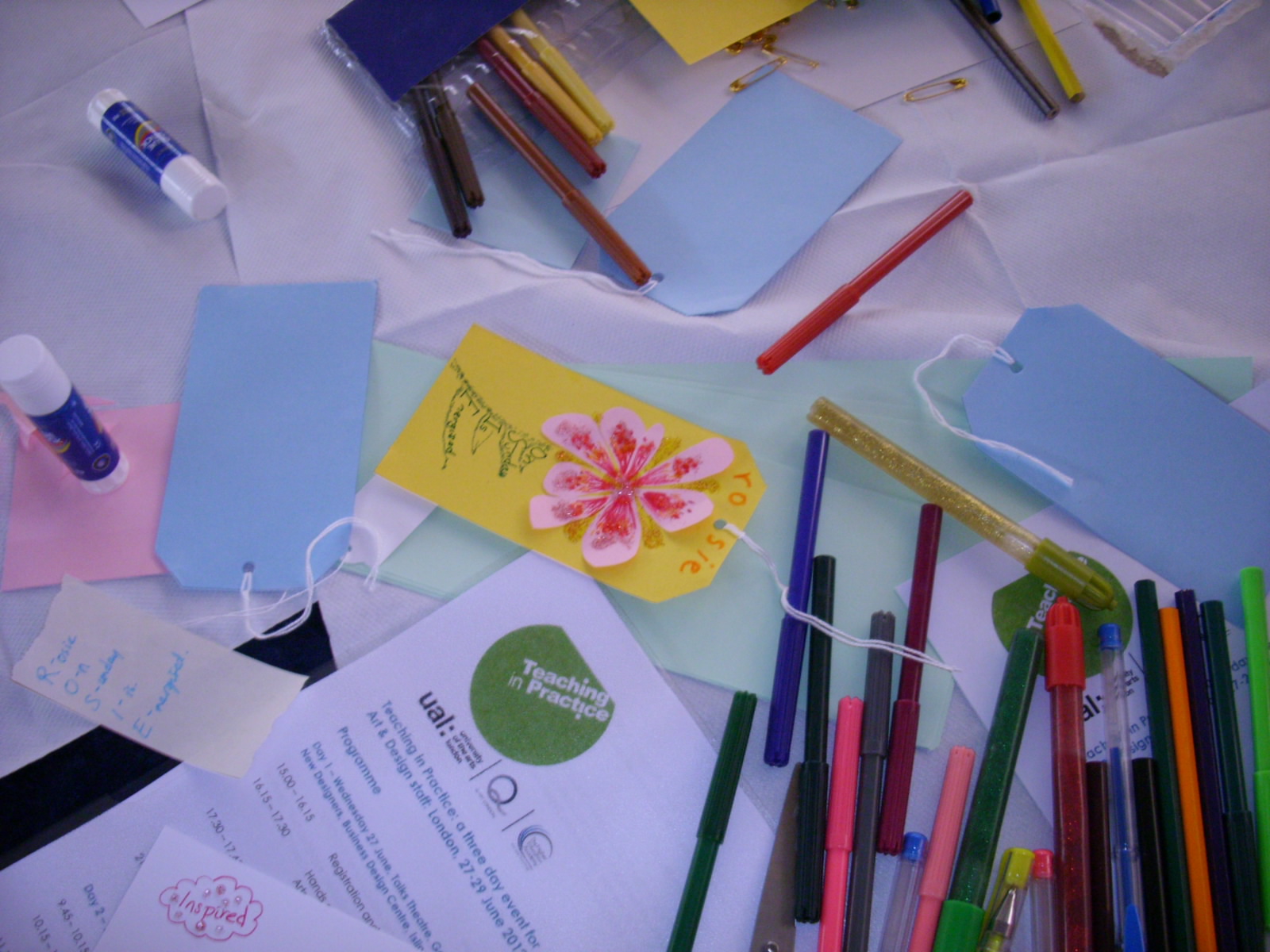
icebreaking through making name tags

At the end of June I went to the Teaching in Practice event, which was three days of Art and Design teaching staff getting together at different venues to network and talk about teaching in practice. Myself and Pat Francis had been invited to do two sessions, one on the first day as an ice-breaker and one on the second day to particularly get people thinking about the reflection-THROUGH-action that making provides.

the glue sticks came out again

One of the key formats we wanted to concentrate on was the use of postcards to focus thought, take notes and provide feedback, so everybody got a pack of postcards to utilise throughout the event, and we encouraged people to write/draw/collage their feedback down as well on self-adressed postcards, which I took home with the promise to mail them out in early September to remind people of the experience they had. (And yes, I did do that a couple of days ago.)

The first day was hosted at the New Designers 2012 exhibition, so we had the chance to see the show as well, and included a welcome by Linda Drew celebrating the launch of the Teaching in Practice event, which will hopefully become a regular feature on the HEA calendar.

Day two was taking place at the Garden Museum, a fabulous space (with some very nice food), particularly as we were lucky with the weather so the first workshop in the morning, Garden of specialist language: Ars cesura vs. art Critique led by Sarah Rowles and Giles Bunch of Q-Art, actually let us take over the garden as we explored ways of presenting work and the ‘crit’ that is often so important in teaching studio-based disciplines.

The keynote after lunch was given by Professor Juan Cruz, the director of the Liverpool School of Art and Design at Liverpool John Morres University. It was titled ‘Hunting in Packs’ and can be seen here (plus a video montage of the whole event).

The last workshop of the day was facilitated by Ellen Sims and Kirsten Hardy, and was exploring the UK Professional Standards Framework for teaching and supporting learning. There were some insightful discussions of the new HEA framework re the new different stages of fellowship – and why we should try to get accredited!

Day three was held at the Sackler Centre at the Victoria & Albert Museum. We were treated to two keynotes, one by Mark Craweley, the director of Widening Participation and Student Progression at the University of the Arts, London with painter, educator and curator Kimathi Donkor, the other by Leanne Manfredi, the programme manager responsible for Higher Education and Creative Industries at the V&A.

After a refreshment break James Corazzo, Senior Lecturer in Graphic Design at the University of Derby, led a workshop intriguingly titles ‘Teach less, Learn More?’ in which he explored ways of actively engaging students by making them get out there are try stuff rather than read or hear about it and stick to the drawing board.

The evening ended with the opportunity to networ as well as visiting the British Design 1948-2012: Innovation in the Modern Age exhibition at the V&A, as well as enjoying the Friday Late at the V&A event Un-built, which explored the interplay between architacture and the visual arts.

By the end of it I was exhausted, but I hope that it’ll be repeated next year so I can do it again! I also came home with a stack of postcards to myself (plus the feedback mentioned above), but that might be a later post.

About a month ago (apologies this post has taken so long, I have great plans of writing up some more events from last month very soon!) I was lucky enough to go down to Bournemouth to attend the HEA funded workshop on the undergraduate research symposium. It was a packed day (with the opportunity to have a peak at the final degree show, I particularly was taken by the model making) at the Arts University College at Bournemouth.

After the formal welcome, Ruth Dineen started us off with a song of praise to the undergraduate research symposium by making the point that students need to be seen as independent from the student pigeonhole, and that this can be achieved through making them stakeholders in the Research Symposium, which with original research, research posters and presentations and Q&A discussions could really be seen as the opposite of the pigeonhole.

Kirsten Hardie and Annie Grove-White then talked us through their experiences of running these symposia for Graphic students, not just within one university, but as a point of exchange of three. They particularly highlighted the potential enclosed in making students the co-owners of such events and linking it to students’ interests and giving it professional and academic validity through having high quality keynote speakers.

What I was especially interested in was the use of posters as a way of bridging written and studio work, with its design helping to find focus and simplify ideas as well as identify new issues that need to be investigated, and the presentation of it as a ‘dry-run’ that can help develop an essay structure. Of course the poster can then also be used as a part of the portfolio, as a cover for the dissertation document, in promotional materials, etc.

We also heard a students’ perspective (which described a journey from the sceptical to the enthusiastic) and ended with discussions in smaller groups to identify challenges and opportunities before feeding back to the larger group. And there were examples of these posters to peruse, from both third and second year students.

My exercise book (which was provided) filled up with notes and ideas of how I could make this work as part of my practice of getting creative practice students to write academic texts. Could the students on the Postgraduate Certificate for Higher Education be roped in to facilitate, select, edit, organise? Could these posters be made an integral part of the conception of their written work and then showcased as part of their final degree show, at a half-time event in January, as part of a film festival for the media students? Of course in practice this might work very differently with students from disciplines that are not graphics centred, but I feel that the potential is definitely there.

Well, the second workshop that I organised for the HEA series of Writing in Creative practice was yesterday – and it went quite well again! However, as I was more involved with facilitating/presenting I didn’t actually get the chance to do my own concertina book, so don’t have any pictures for my reflection – hopefully some of the other participants will post some in the future, a first account can be found on Lisa’s blog.

This workshop was a bit more theoretical than the first one, with a key presentation by Dr. Fiona English who talked about her work with student writing and genre (published as a book I would very much recommend, it’s a bit pricey at the moment, but apparently Continuum is planning to bring out a paperback version so Fiona’s advice if you want the book at an affordable price is to call up Continuum and ask when the paperback version is coming out…).

To get delegates in the mood we started with the deconstructing/reconstructing text activity that Sarah and I had tried out (as described in the previous post) and there were some really interesting ‘poems’ created. Unfortunately the photography student I had booked again was too busy with his final degree show so I don’t have any pictures yet, but hope to provide some soon.

We then had a session with Jane Ball, academic writing skills tutor at the study skills centre at Staffordshire University, talking about ways to engage students with writing, which was followed by a lively discussion.

Fiona’s presentation was after lunch, and included delegates reading extracts from two different pieces of writing by the same student: an academic genre and the same piece re-genred into a play. We had a chance to try to analyse the shift that took place and what was gained and lost in this shift.

We ended with me sharing some ideas of writing as part of creative, practice-orientated tasks and assignments, not unlike the alternative presentations I have blogged about here previously, and I will try to post more details soon.

While we were battling the heat (the only room I could get during ‘exam season’ was in full sunlight, who would have thought the weather would turn out that nice?), it was a lively day and delegates from a number of universities were sharing their experiences and brainstorming to find ways to overcome the challenges we all seem to face.

As preparation for the second Writing in Creative Practice workshop (to be held at Staffordshire University on 24th May), Sarah and myself got together to try out and explore an activity to get us started on the day. We had been inspired by the work of Mary Frances, particularly her ‘cut-up technique’ of creating poetry from existing articles and texts, and other practitioners who use poetic inquiry as part of their research.

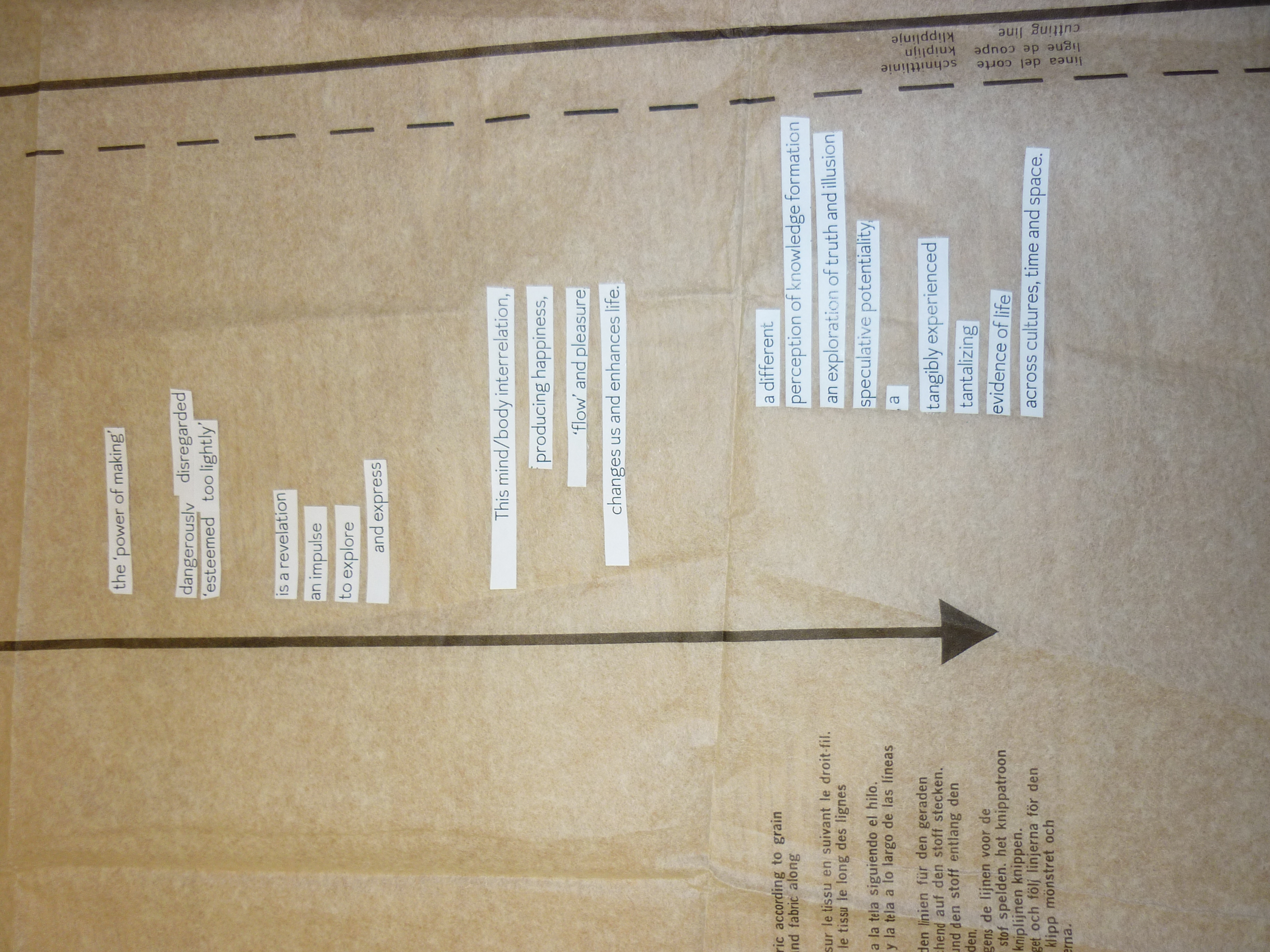
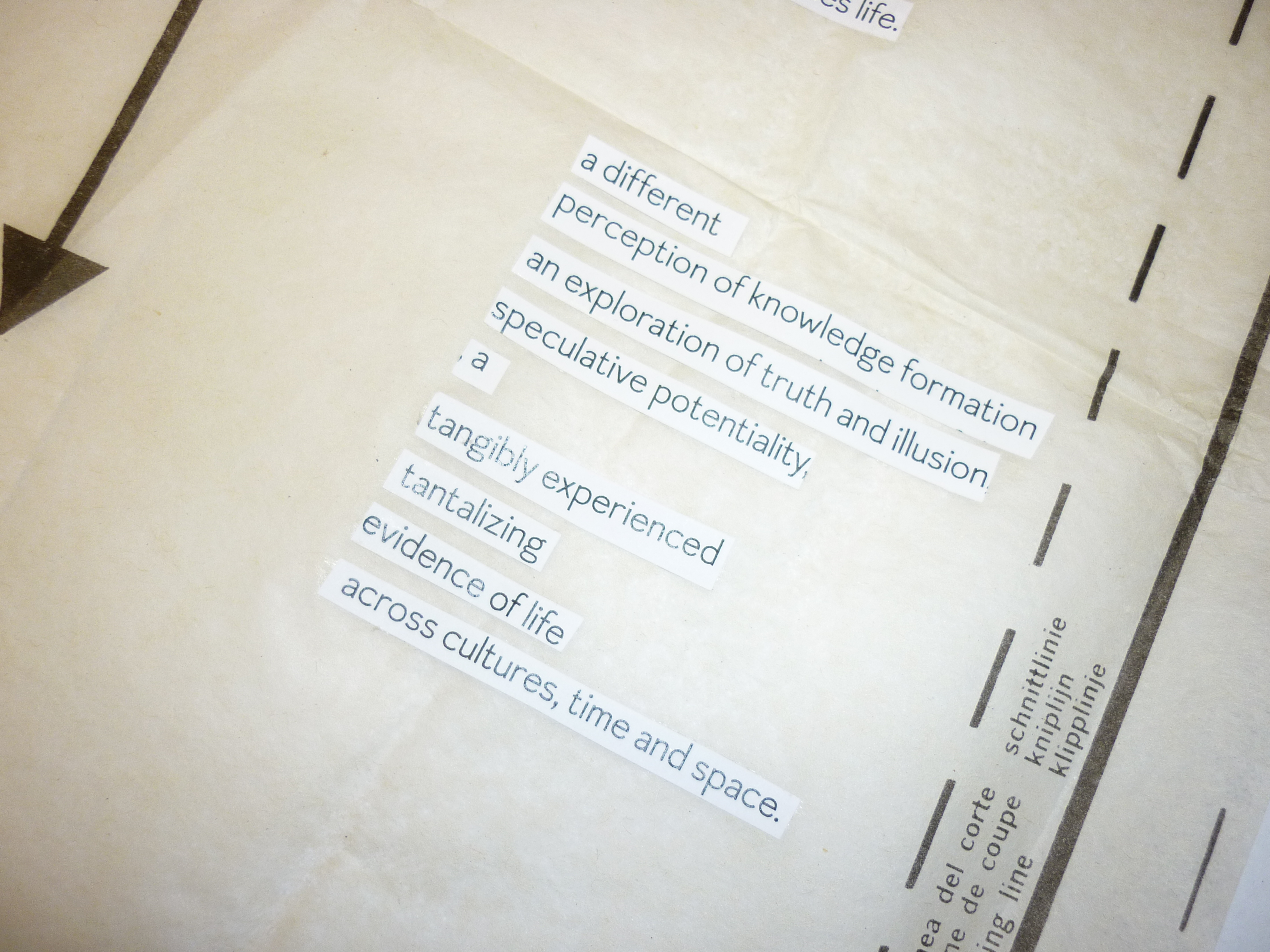
We each started with Martina Margett’s article ‘Action Not Words’ from the Power of Making V&A catalogue (edited by Daniel Charny), looking for phrases and words which caught our attention, cut them out and then reassembled them in a vaguely poetic format. These individual responses to the source material turned out to be surprisingly different as you can see in these pictures.

Sarah's poem

Alke's poem


A detail from Sarah's poem


As Sarah’s colleague Judith Kidder remarked, these outcomes were almost like wordles or word clouds, but because they were not computer generated, they did not look for the frequency of the words, but rather related to the personal meaning that phrases had – invoking ideas, images and thoughts.

Looking at each other’s work we found intriguing similarities and differences – fascinated by each other’s choices there were some phrases we had both seemed to connect to, while there were others one of us had seemingly passed by.

A detail from Alke's poem

Sharing the two works was an important part of the process, highlighting unexpected connections, making us want to revisit the original. We (with Judith) subsequently reflected on the potential this could have in our teaching, particularly the value of this as a means to get students to engage with academic texts. On the one hand tutors could prepare their own take on a text in this visually poetic way in order to entice students to give the whole piece a go. On the other students could be tasked with creating their own poetic response reflecting on an academic piece of writing – deconstructing and reconstructing a text.

P.S.: while the idea was to try this out for the workshop, we were so eager to start neither of us noted the time when we began. Consequently we have no idea how long it took, suffice to say that we ended up being quite engrossed in our making… sitting on separate tables in content silence, armed with scissors and glue stick, completed immersed in the ‘flow’ of the creative process.